The Hidden Cost of Non-Compliance: What Clinics Lose Before the First Fine
In healthcare, compliance is often viewed as a legal obligation, something to consider only when an inspection notice arrives or a violation is issued.
But in reality, the true cost of non-compliance begins long before any fine is written.
Clinics across the U.S. lose tens of thousands of dollars every year
due to inefficiencies, staff turnover, denied reimbursements, and reputational damage, all resulting from systems that quietly fall out of alignment with regulatory and accreditation standards.
At Extensive Medical Consultant (EMC),
Dr. Scarlett Lusk works with clinics that are technically “operating,” yet financially bleeding behind the scenes. This article explains where those hidden losses come from and how they can be prevented.
1. Revenue Loss Happens Long Before a Penalty
Most healthcare leaders assume compliance only affects them if regulators show up.
The truth is far more costly.
Non-compliant workflows often lead to:
- Denied or delayed insurance claims
- Incomplete or inaccurate documentation
- Coding and billing errors
- Missed quality benchmarks
These mistakes don’t always trigger fines; they simply reduce the money your clinic earns.
A clinic can be seeing full appointment schedules and still be losing thousands each month because its documentation, policies, or internal systems don’t meet payer and accreditation standards.
When clinics work with EMC, we often find that
5–15% of revenue is quietly being lost
through preventable compliance-related inefficiencies.
That is money already earned but never collected.
2. Non-Compliance Drives Staff Burnout and Leadership Fatigue
Regulatory stress doesn’t only affect paperwork; it affects people.
When systems are unclear or outdated:
- Staff are unsure how to document properly
- Managers spend hours correcting errors
- Providers feel micromanaged
- Leaders carry a constant fear of “getting in trouble.”
This environment creates:
- Burnout
- High turnover
- Low morale
- Increased risk of mistakes
Compliance chaos forces your best people to work in survival mode instead of excellence mode.
Dr. Scarlett Lusk approaches compliance as a leadership and operational system, not a punishment tool. When workflows are designed correctly, staff work with clarity, confidence, and consistency, which protects both revenue and mental well-being.
3. Reputational Damage Is the Most Expensive Cost
In today’s healthcare market, your reputation travels faster than any audit.
Poor compliance can lead to:
- Failed or delayed accreditation
- Negative patient experiences
- Poor reviews
- Lost referral partnerships
- Difficulty attracting top staff
Once trust is damaged, it becomes very expensive to rebuild.
Patients, insurers, and partner organizations want clinics that operate professionally, safely, and transparently. Compliance is what makes that trust visible.
When EMC prepares a clinic for accreditation, inspections, or operational upgrades, we are protecting something far more valuable than compliance; we are protecting credibility.
4. How EMC Prevents These Losses
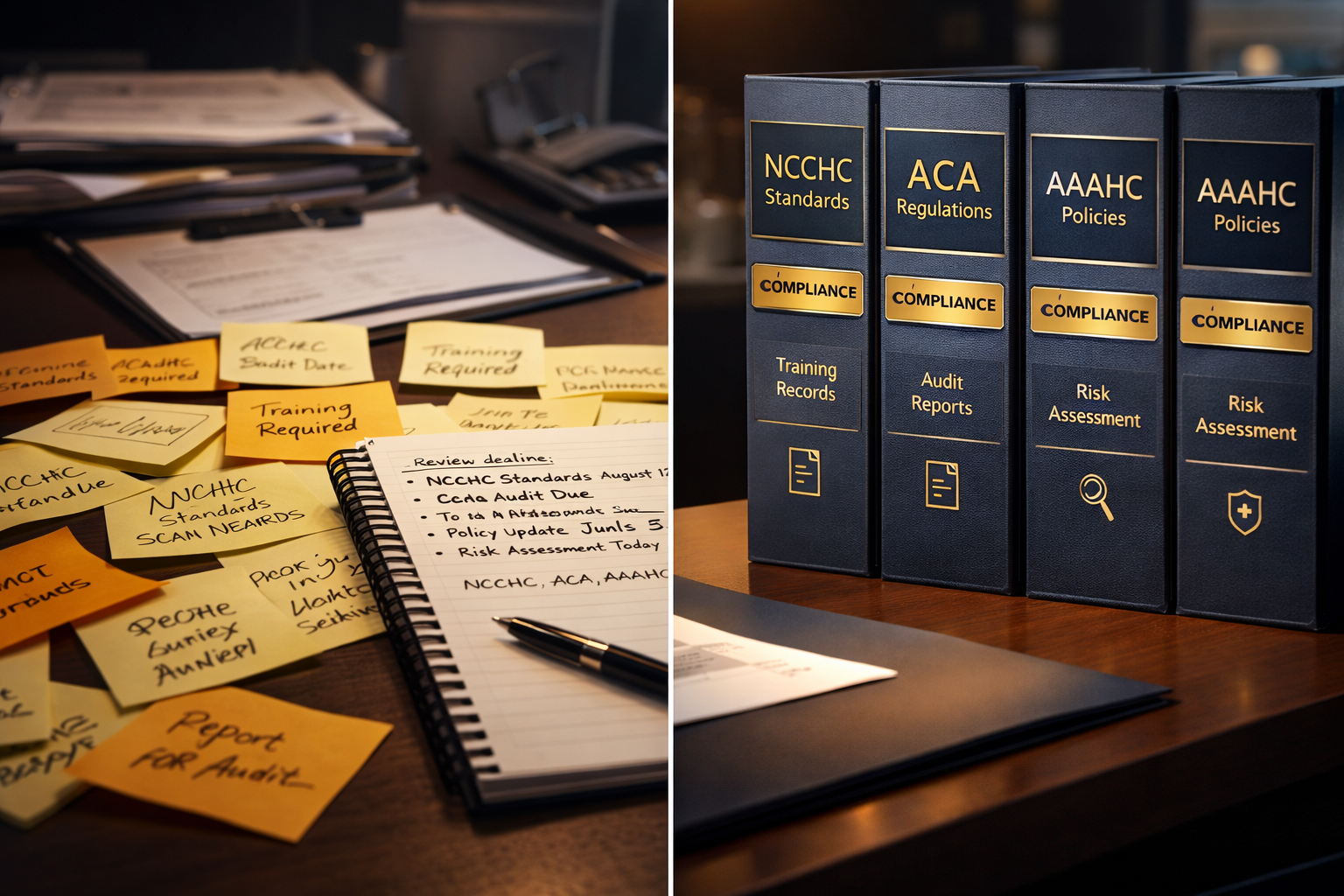
At Extensive Medical Consultant, compliance is not treated as a checklist; it is treated as a business protection strategy.
Under the leadership of Dr. Scarlett Lusk, EMC helps clinics:
- Identify hidden revenue leaks
- Align policies with accreditation and regulatory standards
- Improve documentation and workflow efficiency
- Reduce staff stress and operational confusion
- Prepare confidently for audits, inspections, and growth
Dr. Lusk’s background in healthcare administration, epidemiology, and compliance gives EMC a rare advantage:
We understand both the clinical reality and the regulatory expectations.
That means our solutions are realistic, effective, and sustainable, not theoretical.
Compliance Is Not a Cost. It Is an Investment.
The clinics that struggle the most are rarely those that “don’t care.”
They are the ones who were never shown how to build compliant systems that also support revenue, staff, and patient trust.
Non-compliance costs clinics:
- Money
- Time
- Talent
- Confidence
- Growth
But with the right guidance, those losses are completely preventable.
Take Control of Your Clinic’s Future
If your clinic has never had a full compliance and workflow review, you may already be losing revenue without realizing it.
Let Dr. Scarlett Lusk and Extensive Medical Consultant help you protect what you’ve built and strengthen it for the future.
Schedule your compliance and operations consultation today.
Your clinic deserves clarity, stability, and growth, not silent risk.

Modern healthcare organizations operate in an increasingly complex environment. Regulatory requirements evolve, accreditation standards tighten, and operational demands continue to grow. While internal teams work tirelessly to maintain quality care and efficient operations, many clinics eventually encounter challenges that require a fresh perspective. This is where external consulting expertise becomes valuable. Healthcare consultants are not replacements for internal leadership; they are strategic partners who help organizations strengthen systems, identify risks, and navigate complex compliance landscapes. Through structured guidance and objective analysis, consulting support can help clinics move from reactive problem-solving to proactive operational stability. Under the leadership of Dr. Scarlett Lusk, Extensive Medical Consultant works with healthcare organizations to provide that clarity, structure, and expertise. Why Internal Teams Often Miss Critical Blind Spots Healthcare professionals and administrators are deeply committed to their organizations. However, being closely involved in daily operations can sometimes make it difficult to recognize systemic issues. Internal teams often focus on immediate operational demands: Patient care coordination Staffing challenges Documentation management Regulatory compliance requirements Over time, these responsibilities can create operational “blind spots.” Processes that once worked well may become outdated, inefficient, or misaligned with current compliance expectations. Because internal teams are immersed in daily workflows, they may not always see the structural gaps forming beneath the surface. External consultants provide something essential: objective distance. They can analyze operations without the constraints of internal routines, allowing them to identify hidden inefficiencies, compliance vulnerabilities, and workflow breakdowns that might otherwise go unnoticed. The Value of Objective Leadership Support Healthcare leadership carries significant responsibility. Administrators and clinical leaders must balance patient care, regulatory compliance, operational efficiency, and staff wellbeing—all at the same time. In such high-pressure environments, objective leadership support becomes extremely valuable. External consultants serve as strategic advisors who help leaders: Evaluate operational structures Strengthen compliance frameworks Prepare for accreditation reviews Implement sustainable workflow improvements This type of guidance allows healthcare leaders to make informed decisions based on data, regulatory insight, and industry best practices. Rather than reacting to problems after they occur, organizations can build systems designed to prevent them. When Clinics Should Consider Bringing in Consultants Many clinics assume consulting support is only necessary during a crisis. In reality, the most effective consulting relationships begin before problems escalate. Healthcare organizations often benefit from external expertise during key moments of growth or transition, including: 1. Preparing for Accreditation or Regulatory Surveys Accreditation readiness requires careful preparation. Consultants help ensure policies, documentation, and operational workflows meet regulatory expectations before surveyors arrive. 2. Rapid Organizational Growth As clinics expand, operational structures must evolve. Growth often exposes inefficiencies or compliance gaps that were not visible at smaller scales. 3. Operational Workflow Challenges When teams experience recurring inefficiencies, communication breakdowns, or documentation issues, consulting support can help redesign workflows for greater clarity and efficiency. 4. Leadership Transitions New leadership often benefits from an external operational assessment to understand existing systems and identify areas for improvement. By bringing in consultants at these moments, clinics can proactively address structural issues rather than waiting for them to surface during audits or inspections. EMC’s Tailored Consulting Approach At Extensive Medical Consultant, consulting is not based on one-size-fits-all solutions. Every healthcare organization has unique operational structures, leadership styles, and regulatory challenges. That is why EMC focuses on tailored consulting strategies designed around each client’s specific needs. Guided by the extensive leadership experience of Dr. Scarlett Lusk, EMC provides consulting services that help healthcare organizations strengthen operational foundations while maintaining focus on patient care. The consulting approach emphasizes four key areas: Accreditation Preparation Healthcare organizations receive structured guidance to prepare for accreditation surveys with confidence. Compliance System Development EMC helps clinics design compliance systems that align with regulatory standards and support long-term operational stability. Workflow Optimization Operational workflows are evaluated and redesigned to improve efficiency, communication, and documentation processes. Leadership Support Healthcare executives receive strategic guidance to help them make informed decisions about organizational growth, risk management, and operational improvement. Through this structured and collaborative approach, EMC helps healthcare organizations move beyond temporary fixes and build sustainable systems that support long-term success. Building Stronger Healthcare Systems The healthcare environment will continue to evolve. Regulatory expectations will change, patient demands will grow, and operational complexity will increase. Organizations that thrive in this environment are those that prioritize strong systems, clear structures, and proactive leadership strategies. External consulting support plays an important role in helping healthcare leaders achieve these goals. By identifying blind spots, strengthening compliance frameworks, and optimizing workflows, consultants provide the strategic insight organizations need to operate confidently. With experienced leadership and a commitment to operational excellence, Extensive Medical Consultant continues to support healthcare organizations in building the systems that make sustainable success possible. Need guidance navigating accreditation, compliance, or operational challenges? Connect with Extensive Medical Consultant today to learn how expert consulting support can help strengthen your healthcare organization’s future.

Modern healthcare organizations operate in an increasingly complex environment. Regulatory requirements evolve, accreditation standards tighten, and operational demands continue to grow. While internal teams work tirelessly to maintain quality care and efficient operations, many clinics eventually encounter challenges that require a fresh perspective. This is where external consulting expertise becomes valuable. Healthcare consultants are not replacements for internal leadership; they are strategic partners who help organizations strengthen systems, identify risks, and navigate complex compliance landscapes. Through structured guidance and objective analysis, consulting support can help clinics move from reactive problem-solving to proactive operational stability. Under the leadership of Dr. Scarlett Lusk, Extensive Medical Consultant works with healthcare organizations to provide that clarity, structure, and expertise. Why Internal Teams Often Miss Critical Blind Spots Healthcare professionals and administrators are deeply committed to their organizations. However, being closely involved in daily operations can sometimes make it difficult to recognize systemic issues. Internal teams often focus on immediate operational demands: Patient care coordination Staffing challenges Documentation management Regulatory compliance requirements Over time, these responsibilities can create operational “blind spots.” Processes that once worked well may become outdated, inefficient, or misaligned with current compliance expectations. Because internal teams are immersed in daily workflows, they may not always see the structural gaps forming beneath the surface. External consultants provide something essential: objective distance. They can analyze operations without the constraints of internal routines, allowing them to identify hidden inefficiencies, compliance vulnerabilities, and workflow breakdowns that might otherwise go unnoticed. The Value of Objective Leadership Support Healthcare leadership carries significant responsibility. Administrators and clinical leaders must balance patient care, regulatory compliance, operational efficiency, and staff wellbeing—all at the same time. In such high-pressure environments, objective leadership support becomes extremely valuable. External consultants serve as strategic advisors who help leaders: Evaluate operational structures Strengthen compliance frameworks Prepare for accreditation reviews Implement sustainable workflow improvements This type of guidance allows healthcare leaders to make informed decisions based on data, regulatory insight, and industry best practices. Rather than reacting to problems after they occur, organizations can build systems designed to prevent them. When Clinics Should Consider Bringing in Consultants Many clinics assume consulting support is only necessary during a crisis. In reality, the most effective consulting relationships begin before problems escalate. Healthcare organizations often benefit from external expertise during key moments of growth or transition, including: 1. Preparing for Accreditation or Regulatory Surveys Accreditation readiness requires careful preparation. Consultants help ensure policies, documentation, and operational workflows meet regulatory expectations before surveyors arrive. 2. Rapid Organizational Growth As clinics expand, operational structures must evolve. Growth often exposes inefficiencies or compliance gaps that were not visible at smaller scales. 3. Operational Workflow Challenges When teams experience recurring inefficiencies, communication breakdowns, or documentation issues, consulting support can help redesign workflows for greater clarity and efficiency. 4. Leadership Transitions New leadership often benefits from an external operational assessment to understand existing systems and identify areas for improvement. By bringing in consultants at these moments, clinics can proactively address structural issues rather than waiting for them to surface during audits or inspections. EMC’s Tailored Consulting Approach At Extensive Medical Consultant, consulting is not based on one-size-fits-all solutions. Every healthcare organization has unique operational structures, leadership styles, and regulatory challenges. That is why EMC focuses on tailored consulting strategies designed around each client’s specific needs. Guided by the extensive leadership experience of Dr. Scarlett Lusk, EMC provides consulting services that help healthcare organizations strengthen operational foundations while maintaining focus on patient care. The consulting approach emphasizes four key areas: Accreditation Preparation Healthcare organizations receive structured guidance to prepare for accreditation surveys with confidence. Compliance System Development EMC helps clinics design compliance systems that align with regulatory standards and support long-term operational stability. Workflow Optimization Operational workflows are evaluated and redesigned to improve efficiency, communication, and documentation processes. Leadership Support Healthcare executives receive strategic guidance to help them make informed decisions about organizational growth, risk management, and operational improvement. Through this structured and collaborative approach, EMC helps healthcare organizations move beyond temporary fixes and build sustainable systems that support long-term success. Building Stronger Healthcare Systems The healthcare environment will continue to evolve. Regulatory expectations will change, patient demands will grow, and operational complexity will increase. Organizations that thrive in this environment are those that prioritize strong systems, clear structures, and proactive leadership strategies. External consulting support plays an important role in helping healthcare leaders achieve these goals. By identifying blind spots, strengthening compliance frameworks, and optimizing workflows, consultants provide the strategic insight organizations need to operate confidently. With experienced leadership and a commitment to operational excellence, Extensive Medical Consultant continues to support healthcare organizations in building the systems that make sustainable success possible. Need guidance navigating accreditation, compliance, or operational challenges? Connect with Extensive Medical Consultant today to learn how expert consulting support can help strengthen your healthcare organization’s future.