Beyond the Checklist: The Architecture of Continuous Accreditation Readiness

In many healthcare organizations, accreditation readiness begins the same way: urgency.


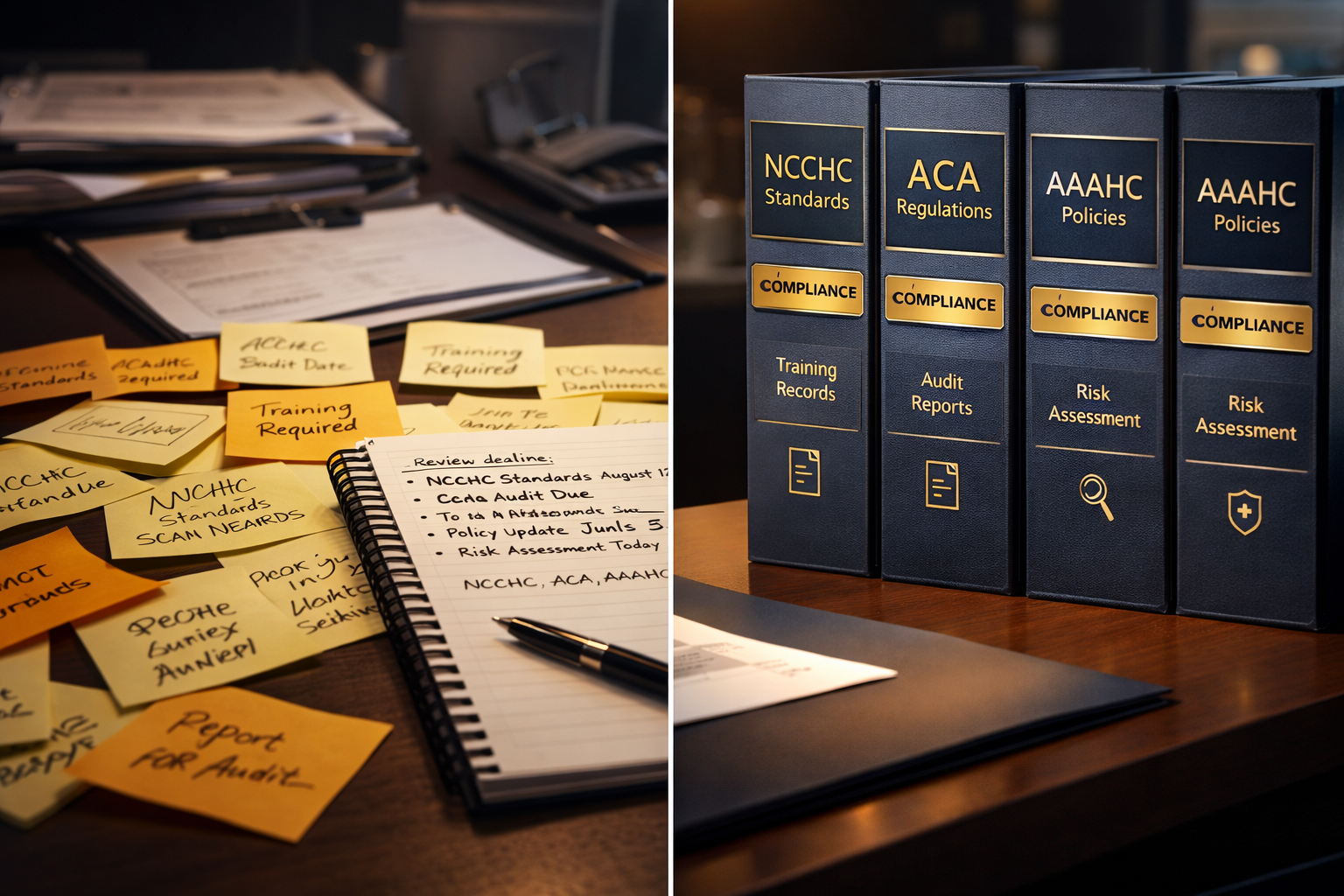
Policies are rushed. Teams scramble for documentation. Leadership meetings multiply overnight. Compliance becomes reactive instead of operational. And for weeks, sometimes months, organizations shift into survival mode, preparing for NCCHC, ACA, or AAAHC review.

The problem is not effort.


The problem is the system underneath it.


Too often, healthcare facilities treat accreditation as an event instead of an operational standard woven into daily leadership, workflows, accountability, and culture. The result is what many executives quietly experience every year: exhaustion, inconsistency, leadership strain, staff frustration, and avoidable risk.


At Extensive Medical Consultant (EMC), we believe accreditation readiness should never feel like a crisis response.


It should feel like operational stability.


Led by Dr. Scarlett Lusk, a healthcare leadership authority with more than 27 years of experience in high-stakes regulatory environments within the U.S. Public Health Service, EMC helps healthcare organizations move beyond “scramble culture” and into sustainable compliance infrastructure designed for long-term performance.


The Hidden Cost of “Scramble Culture”


Many organizations do not realize how expensive reactive accreditation preparation truly becomes.


When compliance systems are fragmented, organizations often experience:


  • Leadership burnout
  • Documentation inconsistencies
  • Communication breakdowns
  • Workflow confusion
  • Increased operational pressure
  • Staff disengagement
  • Elevated compliance risk
  • Reduced survey confidence


The danger is not only the survey outcome itself.


The deeper issue is what reactive preparation reveals about the organization’s operational structure.


Strong organizations should not need to transform overnight for an accreditation visit.


They should already be operating in alignment with the standards they claim to uphold.


That level of consistency only happens when readiness is built into the system itself.


Accreditation Readiness Is Not a Binder; It’s an Operational Architecture


One of the most common misconceptions in healthcare compliance is the belief that accreditation readiness lives inside policies and documentation alone.


In reality, surveyors assess much more than paperwork.


They observe:


  • Leadership communication
  • Operational consistency
  • Staff accountability
  • Workflow execution
  • Quality improvement processes
  • Organizational culture
  • Patient-centered systems
  • Real-time compliance behaviors


This is where many organizations struggle.


Policies may exist on paper, but systems often fail under operational pressure.


At EMC, accreditation readiness is approached differently.


We help organizations build operational architectures where compliance becomes integrated into everyday performance, not isolated inside preparation periods.


That means developing:


  • Sustainable leadership systems
  • Clear accountability structures
  • Operational communication pathways
  • Readiness monitoring processes
  • Quality assurance workflows
  • Documentation consistency systems
  • Risk mitigation frameworks


The goal is not temporary readiness.


The goal is permanent operational alignment.


The EMC Difference: Building Systems, Not Stress


Many consulting firms provide recommendations.


EMC focuses on infrastructure.


That distinction matters.


Healthcare organizations today operate in increasingly complex regulatory environments where reactive leadership models are no longer sustainable. Leaders are expected to manage compliance, workforce pressure, operational efficiency, patient outcomes, and organizational performance simultaneously.


Without structure, even strong teams become overwhelmed.


This is why EMC positions accreditation readiness as a leadership systems issue, not simply a documentation issue.


Through decades of federal healthcare leadership experience, Dr. Scarlett Lusk understands that sustainable compliance depends on operational clarity across every level of the organization.


Her experience spanning healthcare administration, epidemiology, public health, quality assurance, and accreditation readiness allows EMC to identify the operational gaps many organizations overlook until survey pressure exposes them.


EMC helps organizations move from:


  • Reactive → Structured
  • Fragmented → Aligned
  • Stress-driven → System-driven
  • Temporary readiness → Continuous readiness


Because the strongest healthcare systems are not built during accreditation season.

They are built every day.


Why Continuous Readiness Protects More Than Compliance


Continuous accreditation readiness does more than improve survey outcomes.

It strengthens the entire organization.


Organizations with integrated compliance systems often experience:


  • Improved operational confidence
  • Better staff communication
  • Stronger leadership alignment
  • Reduced organizational stress
  • Increased accountability
  • Greater patient-centered consistency
  • Higher long-term operational stability


In other words, readiness is not just about passing inspections.


It is about building organizations capable of performing consistently under pressure.


That is what separates sustainable healthcare leadership from reactive management.


Dr. Scarlett Lusk’s Leadership Insight


“Organizations should never have to become compliant overnight. Strong systems create readiness long before a survey begins.”


That philosophy is central to EMC’s approach.


Accreditation readiness should not disrupt operations.


It should reflect them.


Moving Beyond the Checklist


Healthcare organizations cannot afford to treat compliance as a temporary project anymore.


The future belongs to organizations that build operational systems capable of sustaining quality, accountability, and readiness continuously, not occasionally.


That shift requires more than policies.


It requires leadership structure, operational clarity, and strategic infrastructure.


That is where EMC delivers value.


At Extensive Medical Consultant, we help healthcare organizations strengthen compliance systems, operational performance, leadership stability, and accreditation readiness through practical strategies rooted in real-world healthcare experience.


Because accreditation should never feel like panic.

It should feel like proof.


Ready to Strengthen Your Accreditation Infrastructure?


Connect with Dr. Scarlett Lusk and EMC to build systems designed for long-term operational excellence and continuous readiness.



Black shapes with a white diagonal stripe on a white background.

Have a question?

We’re here to help. Send us a message or give us a call today

346-564-1335
hidden compliance risks ambulatory correctional healthcare
By Scarlett Lusk • August 19, 2026
Discover the hidden operational gaps — "silent zones" — that drive compliance failures in ambulatory and correctional healthcare. Expert insight from Dr. Scarlett Lusk, EMC.
By Scarlett Lusk • August 9, 2026
Poor clinical documentation creates legal vulnerability even when care was correct. Learn how EMC builds systemic documentation frameworks that protect your organization.
By Scarlett Lusk • June 30, 2026
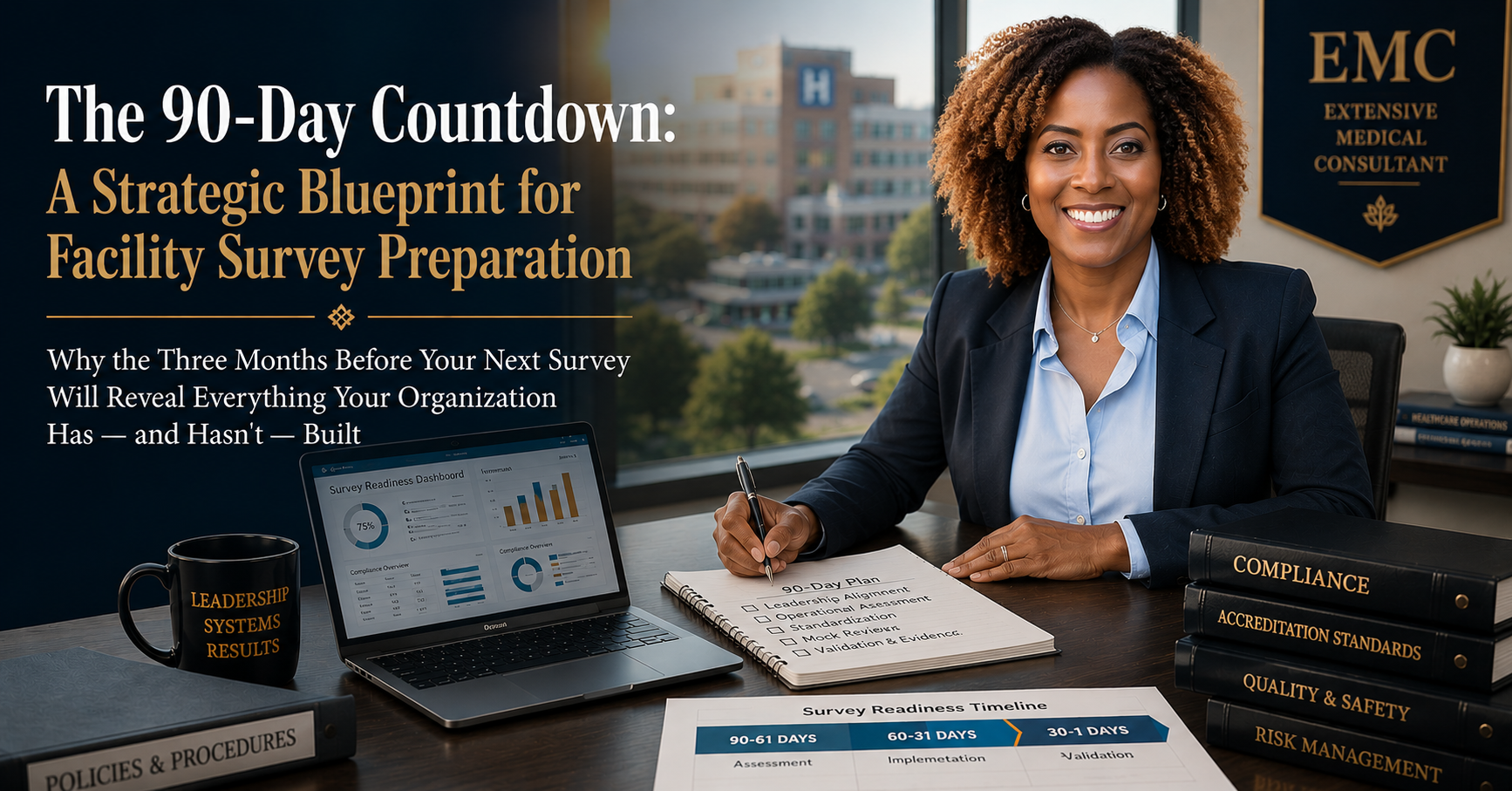
A 90-day executive blueprint for accreditation survey readiness. Learn how healthcare leaders build sustainable systems, not last-minute checklists.
Leadership Under Pressure: Lessons from 27 Years in the U.S. Public Health Service
By Scarlett Lusk • May 29, 2026
Dr. Scarlett Lusk shares 6 leadership lessons from 27 years in the U.S. Public Health Service — and how military-grade discipline transforms civilian healthcare operations.
Healthcare compliance consultant reviewing financial performance dashboard — EMC, Houston TX
By Scarlett Lusk • May 18, 2026
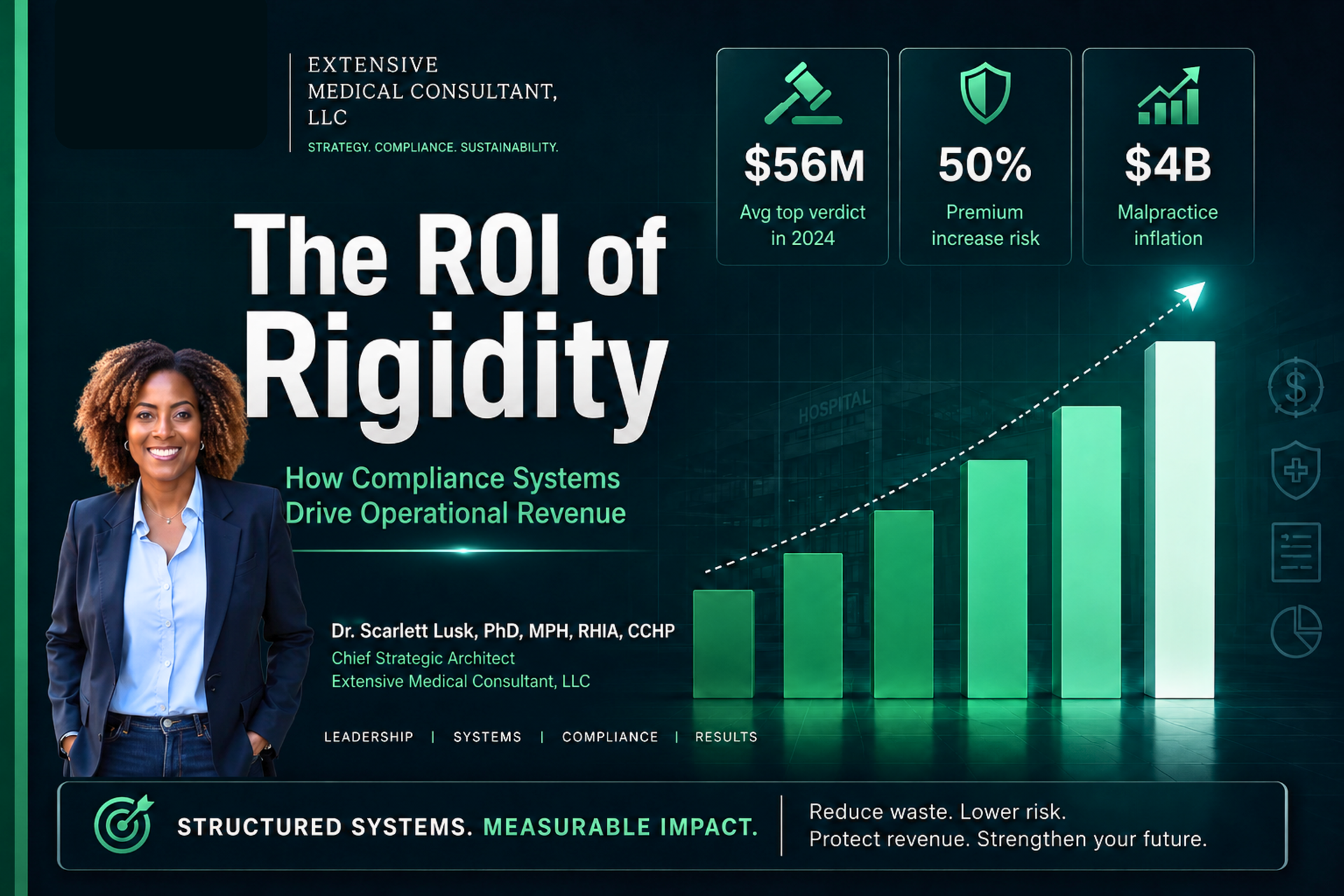
Learn how structured healthcare compliance systems reduce waste, lower litigation risk, and compress insurance premiums — generating measurable financial returns for CFOs and CEOs. Expert insight from Dr. Scarlett Lusk, Extensive Medical Consultant, LLC.
The
By Scarlett Lusk • April 21, 2026
Tribal knowledge in healthcare is your most dangerous compliance vulnerability. Discover how person-dependent systems create accreditation risk and how EMC builds the documentation frameworks that eliminate it.
By Scarlett Lusk • April 11, 2026
Healthcare leadership burnout is a systems problem, not a personal one. Discover how EMC helps healthcare executives reduce operational pressure through compliance systems, workflow optimization, and leadership frameworks.
Healthcare accreditation consulting by Dr. Scarlett Lusk — compliance and audit readiness expert.
March 23, 2026
Failing accreditation costs more than a citation. Discover the true financial, reputational, and operational consequences — and how EMC helps you prevent them.
By Scarlett Lusk • March 13, 2026
Modern healthcare organizations operate in an increasingly complex environment. Regulatory requirements evolve, accreditation standards tighten, and operational demands continue to grow. While internal teams work tirelessly to maintain quality care and efficient operations, many clinics eventually encounter challenges that require a fresh perspective. This is where external consulting expertise becomes valuable. Healthcare consultants are not replacements for internal leadership; they are strategic partners who help organizations strengthen systems, identify risks, and navigate complex compliance landscapes. Through structured guidance and objective analysis, consulting support can help clinics move from reactive problem-solving to proactive operational stability. Under the leadership of Dr. Scarlett Lusk, Extensive Medical Consultant works with healthcare organizations to provide that clarity, structure, and expertise. Why Internal Teams Often Miss Critical Blind Spots Healthcare professionals and administrators are deeply committed to their organizations. However, being closely involved in daily operations can sometimes make it difficult to recognize systemic issues. Internal teams often focus on immediate operational demands: Patient care coordination Staffing challenges Documentation management Regulatory compliance requirements Over time, these responsibilities can create operational “blind spots.” Processes that once worked well may become outdated, inefficient, or misaligned with current compliance expectations. Because internal teams are immersed in daily workflows, they may not always see the structural gaps forming beneath the surface. External consultants provide something essential: objective distance. They can analyze operations without the constraints of internal routines, allowing them to identify hidden inefficiencies, compliance vulnerabilities, and workflow breakdowns that might otherwise go unnoticed. The Value of Objective Leadership Support Healthcare leadership carries significant responsibility. Administrators and clinical leaders must balance patient care, regulatory compliance, operational efficiency, and staff wellbeing—all at the same time. In such high-pressure environments, objective leadership support becomes extremely valuable. External consultants serve as strategic advisors who help leaders: Evaluate operational structures Strengthen compliance frameworks Prepare for accreditation reviews Implement sustainable workflow improvements This type of guidance allows healthcare leaders to make informed decisions based on data, regulatory insight, and industry best practices. Rather than reacting to problems after they occur, organizations can build systems designed to prevent them. When Clinics Should Consider Bringing in Consultants Many clinics assume consulting support is only necessary during a crisis. In reality, the most effective consulting relationships begin before problems escalate. Healthcare organizations often benefit from external expertise during key moments of growth or transition, including: 1. Preparing for Accreditation or Regulatory Surveys Accreditation readiness requires careful preparation. Consultants help ensure policies, documentation, and operational workflows meet regulatory expectations before surveyors arrive. 2. Rapid Organizational Growth As clinics expand, operational structures must evolve. Growth often exposes inefficiencies or compliance gaps that were not visible at smaller scales. 3. Operational Workflow Challenges When teams experience recurring inefficiencies, communication breakdowns, or documentation issues, consulting support can help redesign workflows for greater clarity and efficiency. 4. Leadership Transitions New leadership often benefits from an external operational assessment to understand existing systems and identify areas for improvement. By bringing in consultants at these moments, clinics can proactively address structural issues rather than waiting for them to surface during audits or inspections. EMC’s Tailored Consulting Approach At Extensive Medical Consultant, consulting is not based on one-size-fits-all solutions. Every healthcare organization has unique operational structures, leadership styles, and regulatory challenges. That is why EMC focuses on tailored consulting strategies designed around each client’s specific needs. Guided by the extensive leadership experience of Dr. Scarlett Lusk, EMC provides consulting services that help healthcare organizations strengthen operational foundations while maintaining focus on patient care. The consulting approach emphasizes four key areas: Accreditation Preparation Healthcare organizations receive structured guidance to prepare for accreditation surveys with confidence. Compliance System Development EMC helps clinics design compliance systems that align with regulatory standards and support long-term operational stability. Workflow Optimization Operational workflows are evaluated and redesigned to improve efficiency, communication, and documentation processes. Leadership Support Healthcare executives receive strategic guidance to help them make informed decisions about organizational growth, risk management, and operational improvement. Through this structured and collaborative approach, EMC helps healthcare organizations move beyond temporary fixes and build sustainable systems that support long-term success. Building Stronger Healthcare Systems The healthcare environment will continue to evolve. Regulatory expectations will change, patient demands will grow, and operational complexity will increase. Organizations that thrive in this environment are those that prioritize strong systems, clear structures, and proactive leadership strategies. External consulting support plays an important role in helping healthcare leaders achieve these goals. By identifying blind spots, strengthening compliance frameworks, and optimizing workflows, consultants provide the strategic insight organizations need to operate confidently. With experienced leadership and a commitment to operational excellence, Extensive Medical Consultant continues to support healthcare organizations in building the systems that make sustainable success possible. Need guidance navigating accreditation, compliance, or operational challenges? Connect with Extensive Medical Consultant today to learn how expert consulting support can help strengthen your healthcare organization’s future.
By Scarlett Lusk • March 2, 2026
Introduction: Leadership Alone Is Not Enough Healthcare leadership has never been more demanding. Regulatory pressure, workforce shortages, compliance complexity, patient safety expectations, and financial constraints create a constant state of operational tension. Many organizations respond by asking leaders to “do more.” More oversight. More engagement. More availability. But here is the strategic truth: Leadership effort without a leadership structure leads to exhaustion, not excellence. Strong healthcare leadership does not begin with personality, resilience, or even experience. It begins with systems. Dr. Scarlett Lusk, healthcare leadership strategist and founder of Extensive Medical Consultant, LLC, has consistently emphasized that sustainable executive performance is built on infrastructure, not intensity. Her work focuses on transforming overwhelmed leadership environments into structured, high-performing healthcare systems. Because in modern healthcare, effort may sustain you temporarily, but structure sustains you long-term. Leadership Effort vs. Leadership Structure One of the most misunderstood dynamics in healthcare organizations is the difference between leadership effort and leadership structure. Dr. Scarlett Lusk frequently identifies this distinction as the turning point between reactive management and strategic leadership. Leadership Effort Leadership effort is personal. It includes: Long hours Constant decision-making Hands-on crisis resolution Emotional labor Direct involvement in operational issues Effort can temporarily compensate for weak systems. However, it is not scalable, and it does not protect leaders from burnout or compliance risk. When organizations rely heavily on leadership effort, executives become the safety net for every gap in the system. That model is unsustainable. Leadership Structure Leadership structure is organizational. It includes: Defined workflows Clear accountability channels Compliance monitoring systems Communication frameworks Standard operating procedures Structure distributes responsibility. Structure creates predictability. Structure reduces dependency on individual heroics. Dr. Scarlett Lusk’s leadership framework focuses on strengthening these structural pillars so healthcare executives can shift from constant firefighting to strategic oversight. When healthcare systems rely primarily on structure, leaders regain clarity, authority, and sustainability. This distinction is critical in modern healthcare management. How Strong Systems Protect Healthcare Leaders Healthcare systems are not merely operational tools. They are protective architecture. Dr. Scarlett Lusk teaches that well-designed systems serve as executive safeguards, reducing exposure, stabilizing performance, and preventing overload. 1. Systems Reduce Decision Fatigue Without standardized processes, leaders make repetitive operational decisions every day. Over time, this constant cognitive load weakens clarity and slows strategic thinking. Defined systems streamline routine processes, allowing leaders to focus on growth, compliance, integrity, and long-term strategy. Protection begins with predictability. 2. Systems Strengthen Compliance and Risk Management Compliance failures are rarely caused by ignorance. They are often caused by inconsistency. Structured compliance systems: Track documentation Standardize reporting Clarify responsibility Reduce regulatory exposure Dr. Scarlett Lusk integrates compliance architecture directly into operational design, ensuring that protection is built into the system, not added after problems arise. This approach safeguards both the organization and its leadership. 3. Systems Improve Organizational Stability In healthcare, unpredictability increases stress at every level. Strong systems create operational rhythm. When workflows are clearly defined: Teams perform with confidence Communication improves Escalations decrease Leaders regain oversight clarity This stability impacts patient safety, financial performance, and staff retention. According to Dr. Scarlett Lusk, stability is not accidental; it is engineered. Preventing Crisis-Driven Healthcare Management Crisis-driven management is one of the most damaging leadership patterns in healthcare organizations. It often looks like: Constant urgency Reactive compliance responses Emergency staffing solutions Leadership burnout Short-term decision cycles While crisis management may feel productive, over time, it erodes culture, morale, and executive sustainability. Strong healthcare systems prevent crises before they escalate. By implementing: Early-warning compliance monitoring Operational dashboards Defined accountability layers Escalation protocols Organizations shift from reaction to prevention. This is where true strategic leadership emerges, and this is the transformation model Dr. Scarlett Lusk applies when working with healthcare organizations seeking long-term operational strength. Why This Approach Works in Healthcare Organizations Healthcare operates at the intersection of: Clinical care Regulatory governance Financial stewardship Human service delivery Because of this complexity: Informal management fails. Reactive leadership collapses under pressure. Effort-only leadership burns out. Structured healthcare systems align people, policies, and performance into a coordinated framework. Dr. Scarlett Lusk’s leadership model prioritizes: ✔ Organizational clarity ✔ Executive protection ✔ Operational predictability ✔ Sustainable compliance ✔ Long-term growth strategy This positions her not merely as a consultant, but as a healthcare leadership authority focused on systemic transformation. The Strategic Shift: From Overload to Oversight When healthcare leaders transition from effort-based leadership to structure-based leadership, the results are measurable. Before Systems: High stress Frequent compliance risk Reactive culture Leadership exhaustion After Systems: Strategic clarity Defined accountability Reduced operational volatility Sustainable executive performance This shift does not reduce leadership responsibility. It strengthens it. Under structured systems, leaders move from operational overload to strategic oversight, the position true leadership requires. Conclusion: Systems Are the Foundation of Strong Healthcare Leadership Healthcare leadership is not tested during calm seasons; it is tested during complexity. And complexity cannot be managed through effort alone. Strong healthcare leadership starts with strong systems because: Systems protect leaders from overload Systems reduce compliance exposure Systems prevent crisis-driven management Systems allow strategic vision to replace operational chaos In modern healthcare organizations, structure is not optional. It is foundational. Leaders deserve systems that support their responsibility, not systems that rely on their sacrifice. If your leadership team feels overwhelmed, reactive, or stretched beyond capacity, the issue may not be effort; it may be infrastructure. Dr. Scarlett Lusk works directly with healthcare organizations to design operational systems that protect leadership, strengthen compliance, and build sustainable performance. Do not wait for the next crisis to expose structural gaps. Schedule your strategic consultation today and begin building the systems that support strong healthcare leadership. Real leadership strength is not about carrying more. It is about designing better.
More Posts
hidden compliance risks ambulatory correctional healthcare
By Scarlett Lusk • August 19, 2026
Discover the hidden operational gaps — "silent zones" — that drive compliance failures in ambulatory and correctional healthcare. Expert insight from Dr. Scarlett Lusk, EMC.
By Scarlett Lusk • August 9, 2026
Poor clinical documentation creates legal vulnerability even when care was correct. Learn how EMC builds systemic documentation frameworks that protect your organization.
By Scarlett Lusk • June 30, 2026
A 90-day executive blueprint for accreditation survey readiness. Learn how healthcare leaders build sustainable systems, not last-minute checklists.
Leadership Under Pressure: Lessons from 27 Years in the U.S. Public Health Service
By Scarlett Lusk • May 29, 2026
Dr. Scarlett Lusk shares 6 leadership lessons from 27 years in the U.S. Public Health Service — and how military-grade discipline transforms civilian healthcare operations.
Healthcare compliance consultant reviewing financial performance dashboard — EMC, Houston TX
By Scarlett Lusk • May 18, 2026
Learn how structured healthcare compliance systems reduce waste, lower litigation risk, and compress insurance premiums — generating measurable financial returns for CFOs and CEOs. Expert insight from Dr. Scarlett Lusk, Extensive Medical Consultant, LLC.
The
By Scarlett Lusk • April 21, 2026
Tribal knowledge in healthcare is your most dangerous compliance vulnerability. Discover how person-dependent systems create accreditation risk and how EMC builds the documentation frameworks that eliminate it.
By Scarlett Lusk • April 11, 2026
Healthcare leadership burnout is a systems problem, not a personal one. Discover how EMC helps healthcare executives reduce operational pressure through compliance systems, workflow optimization, and leadership frameworks.
Healthcare accreditation consulting by Dr. Scarlett Lusk — compliance and audit readiness expert.
March 23, 2026
Failing accreditation costs more than a citation. Discover the true financial, reputational, and operational consequences — and how EMC helps you prevent them.
By Scarlett Lusk • March 13, 2026
Modern healthcare organizations operate in an increasingly complex environment. Regulatory requirements evolve, accreditation standards tighten, and operational demands continue to grow. While internal teams work tirelessly to maintain quality care and efficient operations, many clinics eventually encounter challenges that require a fresh perspective. This is where external consulting expertise becomes valuable. Healthcare consultants are not replacements for internal leadership; they are strategic partners who help organizations strengthen systems, identify risks, and navigate complex compliance landscapes. Through structured guidance and objective analysis, consulting support can help clinics move from reactive problem-solving to proactive operational stability. Under the leadership of Dr. Scarlett Lusk, Extensive Medical Consultant works with healthcare organizations to provide that clarity, structure, and expertise. Why Internal Teams Often Miss Critical Blind Spots Healthcare professionals and administrators are deeply committed to their organizations. However, being closely involved in daily operations can sometimes make it difficult to recognize systemic issues. Internal teams often focus on immediate operational demands: Patient care coordination Staffing challenges Documentation management Regulatory compliance requirements Over time, these responsibilities can create operational “blind spots.” Processes that once worked well may become outdated, inefficient, or misaligned with current compliance expectations. Because internal teams are immersed in daily workflows, they may not always see the structural gaps forming beneath the surface. External consultants provide something essential: objective distance. They can analyze operations without the constraints of internal routines, allowing them to identify hidden inefficiencies, compliance vulnerabilities, and workflow breakdowns that might otherwise go unnoticed. The Value of Objective Leadership Support Healthcare leadership carries significant responsibility. Administrators and clinical leaders must balance patient care, regulatory compliance, operational efficiency, and staff wellbeing—all at the same time. In such high-pressure environments, objective leadership support becomes extremely valuable. External consultants serve as strategic advisors who help leaders: Evaluate operational structures Strengthen compliance frameworks Prepare for accreditation reviews Implement sustainable workflow improvements This type of guidance allows healthcare leaders to make informed decisions based on data, regulatory insight, and industry best practices. Rather than reacting to problems after they occur, organizations can build systems designed to prevent them. When Clinics Should Consider Bringing in Consultants Many clinics assume consulting support is only necessary during a crisis. In reality, the most effective consulting relationships begin before problems escalate. Healthcare organizations often benefit from external expertise during key moments of growth or transition, including: 1. Preparing for Accreditation or Regulatory Surveys Accreditation readiness requires careful preparation. Consultants help ensure policies, documentation, and operational workflows meet regulatory expectations before surveyors arrive. 2. Rapid Organizational Growth As clinics expand, operational structures must evolve. Growth often exposes inefficiencies or compliance gaps that were not visible at smaller scales. 3. Operational Workflow Challenges When teams experience recurring inefficiencies, communication breakdowns, or documentation issues, consulting support can help redesign workflows for greater clarity and efficiency. 4. Leadership Transitions New leadership often benefits from an external operational assessment to understand existing systems and identify areas for improvement. By bringing in consultants at these moments, clinics can proactively address structural issues rather than waiting for them to surface during audits or inspections. EMC’s Tailored Consulting Approach At Extensive Medical Consultant, consulting is not based on one-size-fits-all solutions. Every healthcare organization has unique operational structures, leadership styles, and regulatory challenges. That is why EMC focuses on tailored consulting strategies designed around each client’s specific needs. Guided by the extensive leadership experience of Dr. Scarlett Lusk, EMC provides consulting services that help healthcare organizations strengthen operational foundations while maintaining focus on patient care. The consulting approach emphasizes four key areas: Accreditation Preparation Healthcare organizations receive structured guidance to prepare for accreditation surveys with confidence. Compliance System Development EMC helps clinics design compliance systems that align with regulatory standards and support long-term operational stability. Workflow Optimization Operational workflows are evaluated and redesigned to improve efficiency, communication, and documentation processes. Leadership Support Healthcare executives receive strategic guidance to help them make informed decisions about organizational growth, risk management, and operational improvement. Through this structured and collaborative approach, EMC helps healthcare organizations move beyond temporary fixes and build sustainable systems that support long-term success. Building Stronger Healthcare Systems The healthcare environment will continue to evolve. Regulatory expectations will change, patient demands will grow, and operational complexity will increase. Organizations that thrive in this environment are those that prioritize strong systems, clear structures, and proactive leadership strategies. External consulting support plays an important role in helping healthcare leaders achieve these goals. By identifying blind spots, strengthening compliance frameworks, and optimizing workflows, consultants provide the strategic insight organizations need to operate confidently. With experienced leadership and a commitment to operational excellence, Extensive Medical Consultant continues to support healthcare organizations in building the systems that make sustainable success possible. Need guidance navigating accreditation, compliance, or operational challenges? Connect with Extensive Medical Consultant today to learn how expert consulting support can help strengthen your healthcare organization’s future.
By Scarlett Lusk • March 2, 2026
Introduction: Leadership Alone Is Not Enough Healthcare leadership has never been more demanding. Regulatory pressure, workforce shortages, compliance complexity, patient safety expectations, and financial constraints create a constant state of operational tension. Many organizations respond by asking leaders to “do more.” More oversight. More engagement. More availability. But here is the strategic truth: Leadership effort without a leadership structure leads to exhaustion, not excellence. Strong healthcare leadership does not begin with personality, resilience, or even experience. It begins with systems. Dr. Scarlett Lusk, healthcare leadership strategist and founder of Extensive Medical Consultant, LLC, has consistently emphasized that sustainable executive performance is built on infrastructure, not intensity. Her work focuses on transforming overwhelmed leadership environments into structured, high-performing healthcare systems. Because in modern healthcare, effort may sustain you temporarily, but structure sustains you long-term. Leadership Effort vs. Leadership Structure One of the most misunderstood dynamics in healthcare organizations is the difference between leadership effort and leadership structure. Dr. Scarlett Lusk frequently identifies this distinction as the turning point between reactive management and strategic leadership. Leadership Effort Leadership effort is personal. It includes: Long hours Constant decision-making Hands-on crisis resolution Emotional labor Direct involvement in operational issues Effort can temporarily compensate for weak systems. However, it is not scalable, and it does not protect leaders from burnout or compliance risk. When organizations rely heavily on leadership effort, executives become the safety net for every gap in the system. That model is unsustainable. Leadership Structure Leadership structure is organizational. It includes: Defined workflows Clear accountability channels Compliance monitoring systems Communication frameworks Standard operating procedures Structure distributes responsibility. Structure creates predictability. Structure reduces dependency on individual heroics. Dr. Scarlett Lusk’s leadership framework focuses on strengthening these structural pillars so healthcare executives can shift from constant firefighting to strategic oversight. When healthcare systems rely primarily on structure, leaders regain clarity, authority, and sustainability. This distinction is critical in modern healthcare management. How Strong Systems Protect Healthcare Leaders Healthcare systems are not merely operational tools. They are protective architecture. Dr. Scarlett Lusk teaches that well-designed systems serve as executive safeguards, reducing exposure, stabilizing performance, and preventing overload. 1. Systems Reduce Decision Fatigue Without standardized processes, leaders make repetitive operational decisions every day. Over time, this constant cognitive load weakens clarity and slows strategic thinking. Defined systems streamline routine processes, allowing leaders to focus on growth, compliance, integrity, and long-term strategy. Protection begins with predictability. 2. Systems Strengthen Compliance and Risk Management Compliance failures are rarely caused by ignorance. They are often caused by inconsistency. Structured compliance systems: Track documentation Standardize reporting Clarify responsibility Reduce regulatory exposure Dr. Scarlett Lusk integrates compliance architecture directly into operational design, ensuring that protection is built into the system, not added after problems arise. This approach safeguards both the organization and its leadership. 3. Systems Improve Organizational Stability In healthcare, unpredictability increases stress at every level. Strong systems create operational rhythm. When workflows are clearly defined: Teams perform with confidence Communication improves Escalations decrease Leaders regain oversight clarity This stability impacts patient safety, financial performance, and staff retention. According to Dr. Scarlett Lusk, stability is not accidental; it is engineered. Preventing Crisis-Driven Healthcare Management Crisis-driven management is one of the most damaging leadership patterns in healthcare organizations. It often looks like: Constant urgency Reactive compliance responses Emergency staffing solutions Leadership burnout Short-term decision cycles While crisis management may feel productive, over time, it erodes culture, morale, and executive sustainability. Strong healthcare systems prevent crises before they escalate. By implementing: Early-warning compliance monitoring Operational dashboards Defined accountability layers Escalation protocols Organizations shift from reaction to prevention. This is where true strategic leadership emerges, and this is the transformation model Dr. Scarlett Lusk applies when working with healthcare organizations seeking long-term operational strength. Why This Approach Works in Healthcare Organizations Healthcare operates at the intersection of: Clinical care Regulatory governance Financial stewardship Human service delivery Because of this complexity: Informal management fails. Reactive leadership collapses under pressure. Effort-only leadership burns out. Structured healthcare systems align people, policies, and performance into a coordinated framework. Dr. Scarlett Lusk’s leadership model prioritizes: ✔ Organizational clarity ✔ Executive protection ✔ Operational predictability ✔ Sustainable compliance ✔ Long-term growth strategy This positions her not merely as a consultant, but as a healthcare leadership authority focused on systemic transformation. The Strategic Shift: From Overload to Oversight When healthcare leaders transition from effort-based leadership to structure-based leadership, the results are measurable. Before Systems: High stress Frequent compliance risk Reactive culture Leadership exhaustion After Systems: Strategic clarity Defined accountability Reduced operational volatility Sustainable executive performance This shift does not reduce leadership responsibility. It strengthens it. Under structured systems, leaders move from operational overload to strategic oversight, the position true leadership requires. Conclusion: Systems Are the Foundation of Strong Healthcare Leadership Healthcare leadership is not tested during calm seasons; it is tested during complexity. And complexity cannot be managed through effort alone. Strong healthcare leadership starts with strong systems because: Systems protect leaders from overload Systems reduce compliance exposure Systems prevent crisis-driven management Systems allow strategic vision to replace operational chaos In modern healthcare organizations, structure is not optional. It is foundational. Leaders deserve systems that support their responsibility, not systems that rely on their sacrifice. If your leadership team feels overwhelmed, reactive, or stretched beyond capacity, the issue may not be effort; it may be infrastructure. Dr. Scarlett Lusk works directly with healthcare organizations to design operational systems that protect leadership, strengthen compliance, and build sustainable performance. Do not wait for the next crisis to expose structural gaps. Schedule your strategic consultation today and begin building the systems that support strong healthcare leadership. Real leadership strength is not about carrying more. It is about designing better.