Telehealth in 2024: A Shifting Landscape of Innovation and Challenges

Areola repair houston

Telehealth has undoubtedly revolutionized the healthcare industry, especially with the unprecedented acceleration of adoption due to the COVID-19 pandemic. As we enter 2024, the telehealth landscape continues to evolve, presenting both exciting opportunities and unique challenges for healthcare providers and patients alike.


Trends Shaping the Future of Telehealth

Several key trends are driving the evolution of telehealth in 2024:


  1. Integration with Electronic Health Records (EHRs): Seamless integration of telehealth platforms with EHRs is becoming increasingly crucial for enhancing the efficiency and effectiveness of healthcare delivery. This integration enables providers to access patient records, schedule appointments, and conduct virtual visits all within a single platform.
  2. Remote Patient Monitoring (RPM): The use of connected devices and wearables to monitor patient health remotely is gaining traction. RPM allows for continuous monitoring of vital signs, medication adherence, and other health parameters, enabling early intervention and personalized care.
  3. Expansion of Specialty Care: Telehealth is no longer limited to primary care. Increasingly, specialists are leveraging telehealth to provide consultations, diagnostics, and even treatments remotely, improving access to care for patients in rural or underserved areas.
  4. Artificial Intelligence (AI) and Machine Learning (ML): AI and ML are being integrated into telehealth platforms to enhance diagnosis, personalize treatment plans, and streamline administrative tasks. This can lead to improved patient outcomes and greater efficiency for healthcare providers.


Challenges on the Horizon

Despite the promising advancements, telehealth also faces several challenges:


  1. Reimbursement and Regulatory Landscape: The expiration of certain pandemic-era flexibilities in reimbursement and regulations poses a challenge for telehealth providers. Navigating the evolving regulatory landscape and ensuring sustainable reimbursement models are crucial for the continued growth of telehealth.
  2. Digital Divide and Health Disparities: While telehealth has the potential to improve access to care, concerns remain about exacerbating existing health disparities due to unequal access to technology and broadband internet, particularly in rural and underserved communities.
  3. Patient and Provider Adoption: While patient and provider acceptance of telehealth has grown significantly, ensuring continued adoption and addressing concerns about privacy, security, and the quality of virtual care remain important considerations.


Opportunities for Growth

Amidst the challenges, telehealth presents significant opportunities for growth and innovation:


  1. Hybrid Care Models: Combining in-person visits with virtual care can offer a more comprehensive and patient-centered approach, leveraging the strengths of both modalities.
  2. Focus on Chronic Disease Management: Telehealth is particularly well-suited for managing chronic conditions, offering convenient and frequent access to care, personalized treatment plans, and remote monitoring.
  3. Expanding Mental Health Services: Telehealth can significantly improve access to mental health care, particularly for individuals who may face barriers to in-person appointments due to stigma, distance, or transportation issues.


Best Practices for Success

To thrive in the evolving telehealth landscape, healthcare providers should focus on:


  • Investing in Robust Technology: Choosing a secure, user-friendly, and HIPAA-compliant telehealth platform is essential.
  • Training Staff and Patients: Ensuring that both staff and patients are comfortable and proficient in using telehealth technology is crucial for successful implementation.
  • Developing Comprehensive Clinical Protocols: Establishing clear guidelines for virtual visits, including patient selection, documentation, and follow-up, can help ensure the quality and safety of telehealth services.
  • Collaborating with Payers and Policymakers: Working with payers and policymakers to advocate for sustainable reimbursement models and supportive regulations is essential for the long-term viability of telehealth.


As we navigate the complexities of the evolving telehealth industry, it's clear that this innovative approach to healthcare delivery is here to stay. By embracing the opportunities, addressing the challenges, and adopting best practices, healthcare providers can leverage telehealth to improve patient outcomes, enhance access to care, and create a more efficient and sustainable healthcare system


Black shapes with a white diagonal stripe on a white background.

Have a question?

We’re here to help. Send us a message or give us a call today

346-564-1335
hidden compliance risks ambulatory correctional healthcare
By Scarlett Lusk August 19, 2026
Discover the hidden operational gaps — "silent zones" — that drive compliance failures in ambulatory and correctional healthcare. Expert insight from Dr. Scarlett Lusk, EMC.
By Scarlett Lusk August 9, 2026
Poor clinical documentation creates legal vulnerability even when care was correct. Learn how EMC builds systemic documentation frameworks that protect your organization.
By Scarlett Lusk June 30, 2026
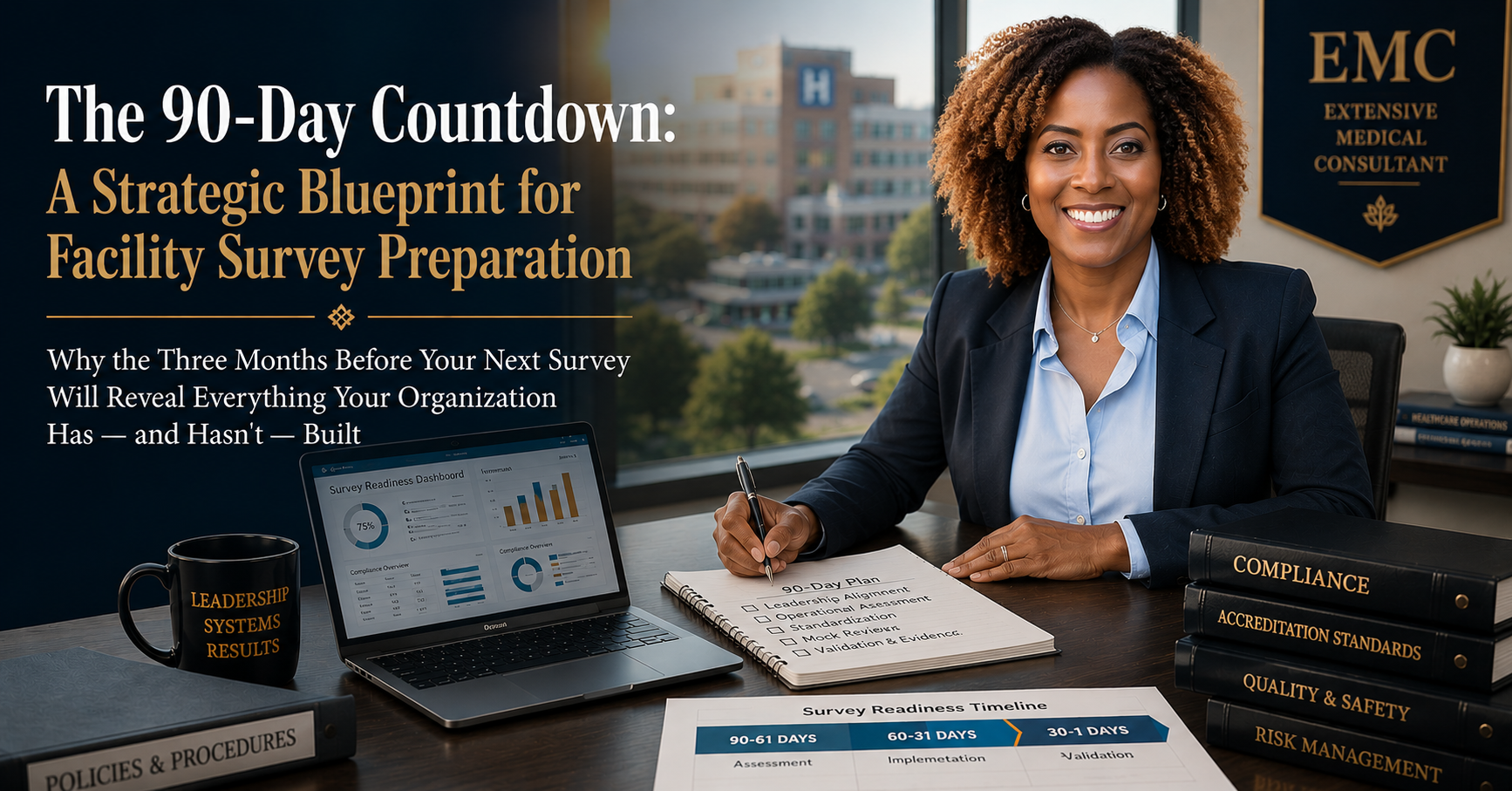
A 90-day executive blueprint for accreditation survey readiness. Learn how healthcare leaders build sustainable systems, not last-minute checklists.
Leadership Under Pressure: Lessons from 27 Years in the U.S. Public Health Service
By Scarlett Lusk May 29, 2026
Dr. Scarlett Lusk shares 6 leadership lessons from 27 years in the U.S. Public Health Service — and how military-grade discipline transforms civilian healthcare operations.
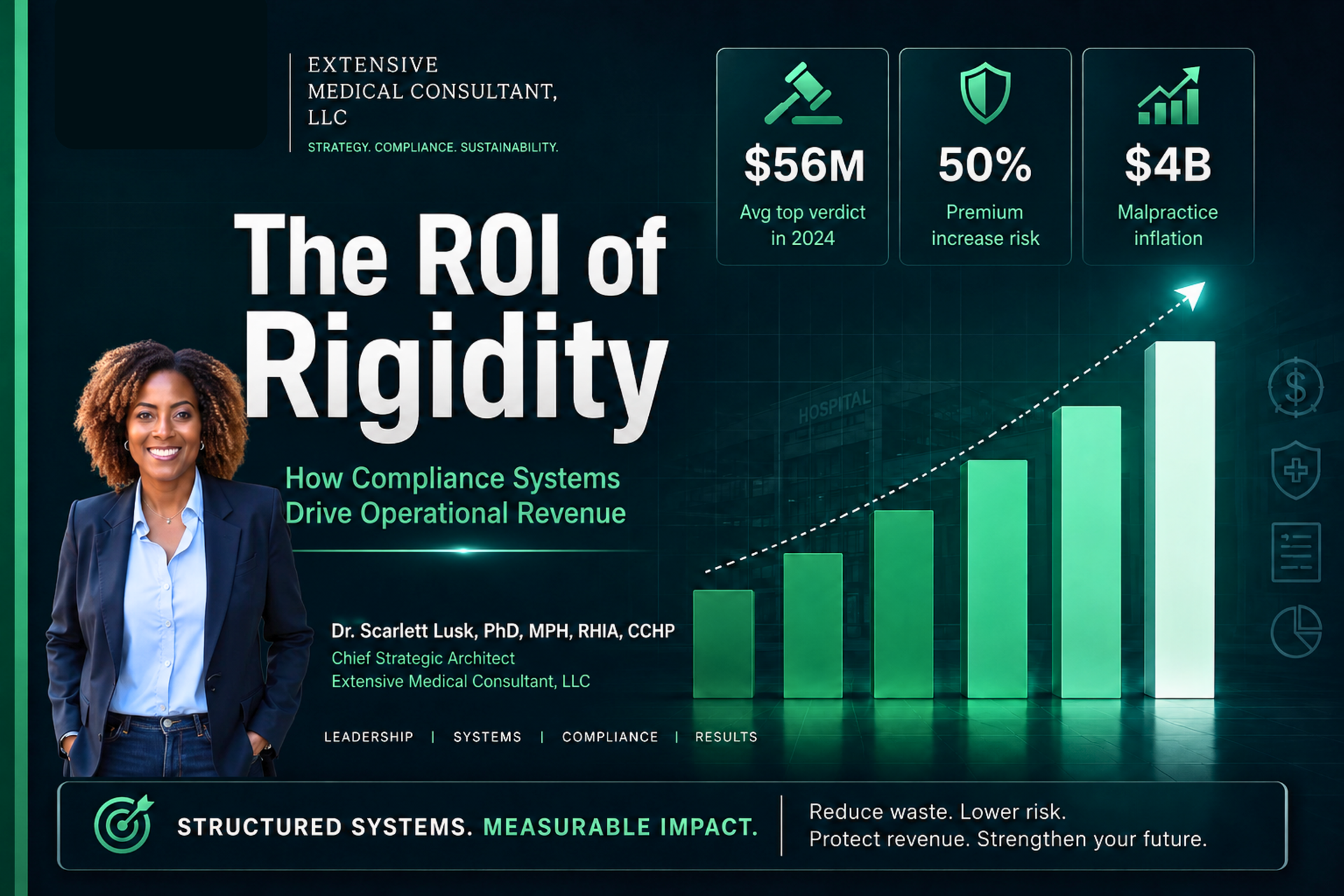
Healthcare compliance consultant reviewing financial performance dashboard — EMC, Houston TX
By Scarlett Lusk May 18, 2026
Learn how structured healthcare compliance systems reduce waste, lower litigation risk, and compress insurance premiums — generating measurable financial returns for CFOs and CEOs. Expert insight from Dr. Scarlett Lusk, Extensive Medical Consultant, LLC.
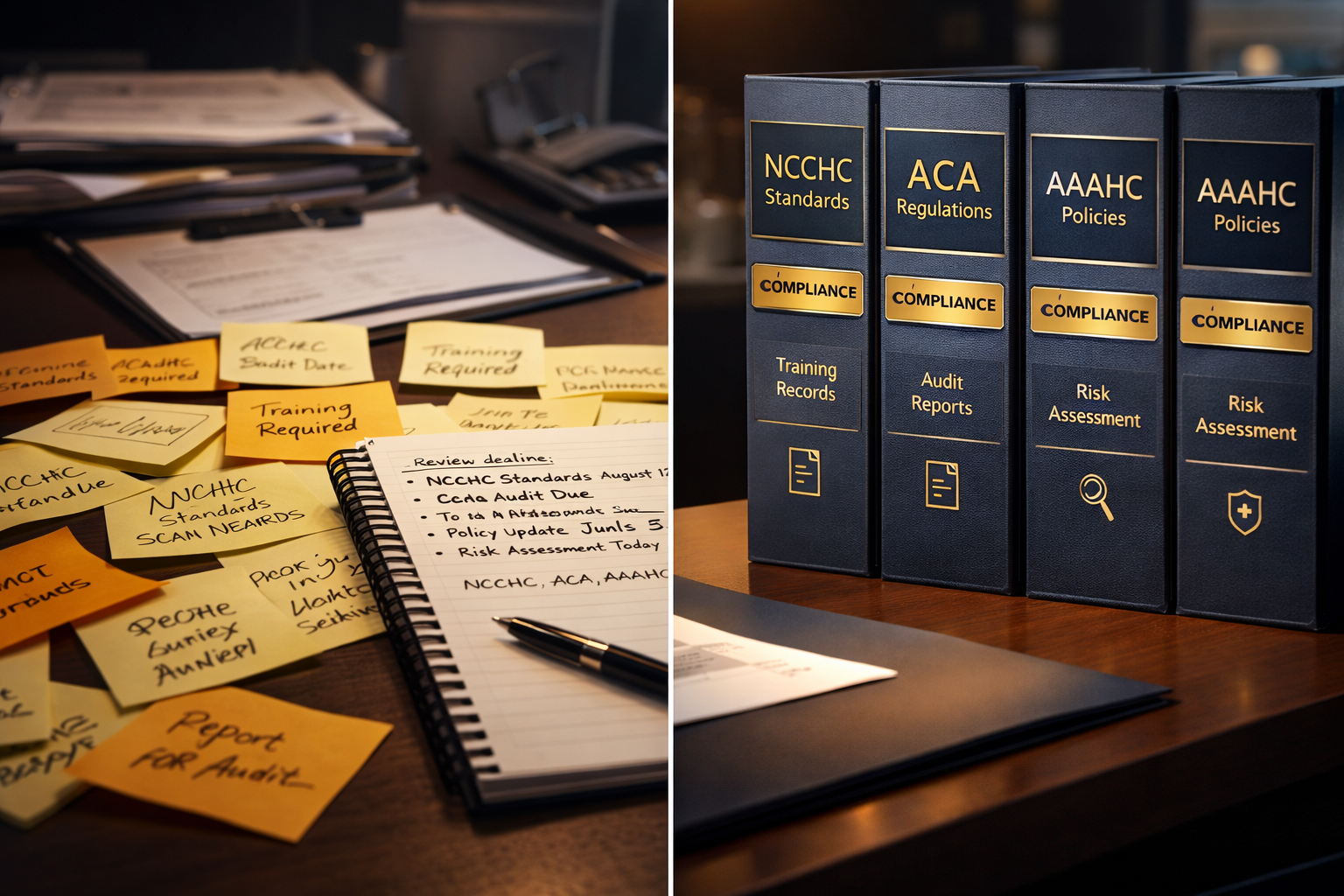
Beyond the Checklist: Continuous Accreditation Readiness for NCCHC, ACA & AAAHC | EMC
By Scarlett Lusk May 13, 2026
Discover how healthcare organizations can move beyond reactive accreditation preparation and build sustainable compliance systems for NCCHC, ACA, and AAAHC readiness with EMC and Dr. Scarlett Lusk.
The
By Scarlett Lusk April 21, 2026
Tribal knowledge in healthcare is your most dangerous compliance vulnerability. Discover how person-dependent systems create accreditation risk and how EMC builds the documentation frameworks that eliminate it.
By Scarlett Lusk April 11, 2026
Healthcare leadership burnout is a systems problem, not a personal one. Discover how EMC helps healthcare executives reduce operational pressure through compliance systems, workflow optimization, and leadership frameworks.
Healthcare accreditation consulting by Dr. Scarlett Lusk — compliance and audit readiness expert.
March 23, 2026
Failing accreditation costs more than a citation. Discover the true financial, reputational, and operational consequences — and how EMC helps you prevent them.
By Scarlett Lusk March 13, 2026
Modern healthcare organizations operate in an increasingly complex environment. Regulatory requirements evolve, accreditation standards tighten, and operational demands continue to grow. While internal teams work tirelessly to maintain quality care and efficient operations, many clinics eventually encounter challenges that require a fresh perspective. This is where external consulting expertise becomes valuable. Healthcare consultants are not replacements for internal leadership; they are strategic partners who help organizations strengthen systems, identify risks, and navigate complex compliance landscapes. Through structured guidance and objective analysis, consulting support can help clinics move from reactive problem-solving to proactive operational stability. Under the leadership of Dr. Scarlett Lusk, Extensive Medical Consultant works with healthcare organizations to provide that clarity, structure, and expertise. Why Internal Teams Often Miss Critical Blind Spots Healthcare professionals and administrators are deeply committed to their organizations. However, being closely involved in daily operations can sometimes make it difficult to recognize systemic issues. Internal teams often focus on immediate operational demands: Patient care coordination Staffing challenges Documentation management Regulatory compliance requirements Over time, these responsibilities can create operational “blind spots.” Processes that once worked well may become outdated, inefficient, or misaligned with current compliance expectations. Because internal teams are immersed in daily workflows, they may not always see the structural gaps forming beneath the surface. External consultants provide something essential: objective distance. They can analyze operations without the constraints of internal routines, allowing them to identify hidden inefficiencies, compliance vulnerabilities, and workflow breakdowns that might otherwise go unnoticed. The Value of Objective Leadership Support Healthcare leadership carries significant responsibility. Administrators and clinical leaders must balance patient care, regulatory compliance, operational efficiency, and staff wellbeing—all at the same time. In such high-pressure environments, objective leadership support becomes extremely valuable. External consultants serve as strategic advisors who help leaders: Evaluate operational structures Strengthen compliance frameworks Prepare for accreditation reviews Implement sustainable workflow improvements This type of guidance allows healthcare leaders to make informed decisions based on data, regulatory insight, and industry best practices. Rather than reacting to problems after they occur, organizations can build systems designed to prevent them. When Clinics Should Consider Bringing in Consultants Many clinics assume consulting support is only necessary during a crisis. In reality, the most effective consulting relationships begin before problems escalate. Healthcare organizations often benefit from external expertise during key moments of growth or transition, including: 1. Preparing for Accreditation or Regulatory Surveys Accreditation readiness requires careful preparation. Consultants help ensure policies, documentation, and operational workflows meet regulatory expectations before surveyors arrive. 2. Rapid Organizational Growth As clinics expand, operational structures must evolve. Growth often exposes inefficiencies or compliance gaps that were not visible at smaller scales. 3. Operational Workflow Challenges When teams experience recurring inefficiencies, communication breakdowns, or documentation issues, consulting support can help redesign workflows for greater clarity and efficiency. 4. Leadership Transitions New leadership often benefits from an external operational assessment to understand existing systems and identify areas for improvement. By bringing in consultants at these moments, clinics can proactively address structural issues rather than waiting for them to surface during audits or inspections. EMC’s Tailored Consulting Approach At Extensive Medical Consultant, consulting is not based on one-size-fits-all solutions. Every healthcare organization has unique operational structures, leadership styles, and regulatory challenges. That is why EMC focuses on tailored consulting strategies designed around each client’s specific needs. Guided by the extensive leadership experience of Dr. Scarlett Lusk, EMC provides consulting services that help healthcare organizations strengthen operational foundations while maintaining focus on patient care. The consulting approach emphasizes four key areas: Accreditation Preparation Healthcare organizations receive structured guidance to prepare for accreditation surveys with confidence. Compliance System Development EMC helps clinics design compliance systems that align with regulatory standards and support long-term operational stability. Workflow Optimization Operational workflows are evaluated and redesigned to improve efficiency, communication, and documentation processes. Leadership Support Healthcare executives receive strategic guidance to help them make informed decisions about organizational growth, risk management, and operational improvement. Through this structured and collaborative approach, EMC helps healthcare organizations move beyond temporary fixes and build sustainable systems that support long-term success. Building Stronger Healthcare Systems The healthcare environment will continue to evolve. Regulatory expectations will change, patient demands will grow, and operational complexity will increase. Organizations that thrive in this environment are those that prioritize strong systems, clear structures, and proactive leadership strategies. External consulting support plays an important role in helping healthcare leaders achieve these goals. By identifying blind spots, strengthening compliance frameworks, and optimizing workflows, consultants provide the strategic insight organizations need to operate confidently. With experienced leadership and a commitment to operational excellence, Extensive Medical Consultant continues to support healthcare organizations in building the systems that make sustainable success possible. Need guidance navigating accreditation, compliance, or operational challenges? Connect with Extensive Medical Consultant today to learn how expert consulting support can help strengthen your healthcare organization’s future.
More Posts
hidden compliance risks ambulatory correctional healthcare
By Scarlett Lusk August 19, 2026
Discover the hidden operational gaps — "silent zones" — that drive compliance failures in ambulatory and correctional healthcare. Expert insight from Dr. Scarlett Lusk, EMC.
By Scarlett Lusk August 9, 2026
Poor clinical documentation creates legal vulnerability even when care was correct. Learn how EMC builds systemic documentation frameworks that protect your organization.
By Scarlett Lusk June 30, 2026
A 90-day executive blueprint for accreditation survey readiness. Learn how healthcare leaders build sustainable systems, not last-minute checklists.
Leadership Under Pressure: Lessons from 27 Years in the U.S. Public Health Service
By Scarlett Lusk May 29, 2026
Dr. Scarlett Lusk shares 6 leadership lessons from 27 years in the U.S. Public Health Service — and how military-grade discipline transforms civilian healthcare operations.
Healthcare compliance consultant reviewing financial performance dashboard — EMC, Houston TX
By Scarlett Lusk May 18, 2026
Learn how structured healthcare compliance systems reduce waste, lower litigation risk, and compress insurance premiums — generating measurable financial returns for CFOs and CEOs. Expert insight from Dr. Scarlett Lusk, Extensive Medical Consultant, LLC.
Beyond the Checklist: Continuous Accreditation Readiness for NCCHC, ACA & AAAHC | EMC
By Scarlett Lusk May 13, 2026
Discover how healthcare organizations can move beyond reactive accreditation preparation and build sustainable compliance systems for NCCHC, ACA, and AAAHC readiness with EMC and Dr. Scarlett Lusk.
The
By Scarlett Lusk April 21, 2026
Tribal knowledge in healthcare is your most dangerous compliance vulnerability. Discover how person-dependent systems create accreditation risk and how EMC builds the documentation frameworks that eliminate it.
By Scarlett Lusk April 11, 2026
Healthcare leadership burnout is a systems problem, not a personal one. Discover how EMC helps healthcare executives reduce operational pressure through compliance systems, workflow optimization, and leadership frameworks.
Healthcare accreditation consulting by Dr. Scarlett Lusk — compliance and audit readiness expert.
March 23, 2026
Failing accreditation costs more than a citation. Discover the true financial, reputational, and operational consequences — and how EMC helps you prevent them.
By Scarlett Lusk March 13, 2026
Modern healthcare organizations operate in an increasingly complex environment. Regulatory requirements evolve, accreditation standards tighten, and operational demands continue to grow. While internal teams work tirelessly to maintain quality care and efficient operations, many clinics eventually encounter challenges that require a fresh perspective. This is where external consulting expertise becomes valuable. Healthcare consultants are not replacements for internal leadership; they are strategic partners who help organizations strengthen systems, identify risks, and navigate complex compliance landscapes. Through structured guidance and objective analysis, consulting support can help clinics move from reactive problem-solving to proactive operational stability. Under the leadership of Dr. Scarlett Lusk, Extensive Medical Consultant works with healthcare organizations to provide that clarity, structure, and expertise. Why Internal Teams Often Miss Critical Blind Spots Healthcare professionals and administrators are deeply committed to their organizations. However, being closely involved in daily operations can sometimes make it difficult to recognize systemic issues. Internal teams often focus on immediate operational demands: Patient care coordination Staffing challenges Documentation management Regulatory compliance requirements Over time, these responsibilities can create operational “blind spots.” Processes that once worked well may become outdated, inefficient, or misaligned with current compliance expectations. Because internal teams are immersed in daily workflows, they may not always see the structural gaps forming beneath the surface. External consultants provide something essential: objective distance. They can analyze operations without the constraints of internal routines, allowing them to identify hidden inefficiencies, compliance vulnerabilities, and workflow breakdowns that might otherwise go unnoticed. The Value of Objective Leadership Support Healthcare leadership carries significant responsibility. Administrators and clinical leaders must balance patient care, regulatory compliance, operational efficiency, and staff wellbeing—all at the same time. In such high-pressure environments, objective leadership support becomes extremely valuable. External consultants serve as strategic advisors who help leaders: Evaluate operational structures Strengthen compliance frameworks Prepare for accreditation reviews Implement sustainable workflow improvements This type of guidance allows healthcare leaders to make informed decisions based on data, regulatory insight, and industry best practices. Rather than reacting to problems after they occur, organizations can build systems designed to prevent them. When Clinics Should Consider Bringing in Consultants Many clinics assume consulting support is only necessary during a crisis. In reality, the most effective consulting relationships begin before problems escalate. Healthcare organizations often benefit from external expertise during key moments of growth or transition, including: 1. Preparing for Accreditation or Regulatory Surveys Accreditation readiness requires careful preparation. Consultants help ensure policies, documentation, and operational workflows meet regulatory expectations before surveyors arrive. 2. Rapid Organizational Growth As clinics expand, operational structures must evolve. Growth often exposes inefficiencies or compliance gaps that were not visible at smaller scales. 3. Operational Workflow Challenges When teams experience recurring inefficiencies, communication breakdowns, or documentation issues, consulting support can help redesign workflows for greater clarity and efficiency. 4. Leadership Transitions New leadership often benefits from an external operational assessment to understand existing systems and identify areas for improvement. By bringing in consultants at these moments, clinics can proactively address structural issues rather than waiting for them to surface during audits or inspections. EMC’s Tailored Consulting Approach At Extensive Medical Consultant, consulting is not based on one-size-fits-all solutions. Every healthcare organization has unique operational structures, leadership styles, and regulatory challenges. That is why EMC focuses on tailored consulting strategies designed around each client’s specific needs. Guided by the extensive leadership experience of Dr. Scarlett Lusk, EMC provides consulting services that help healthcare organizations strengthen operational foundations while maintaining focus on patient care. The consulting approach emphasizes four key areas: Accreditation Preparation Healthcare organizations receive structured guidance to prepare for accreditation surveys with confidence. Compliance System Development EMC helps clinics design compliance systems that align with regulatory standards and support long-term operational stability. Workflow Optimization Operational workflows are evaluated and redesigned to improve efficiency, communication, and documentation processes. Leadership Support Healthcare executives receive strategic guidance to help them make informed decisions about organizational growth, risk management, and operational improvement. Through this structured and collaborative approach, EMC helps healthcare organizations move beyond temporary fixes and build sustainable systems that support long-term success. Building Stronger Healthcare Systems The healthcare environment will continue to evolve. Regulatory expectations will change, patient demands will grow, and operational complexity will increase. Organizations that thrive in this environment are those that prioritize strong systems, clear structures, and proactive leadership strategies. External consulting support plays an important role in helping healthcare leaders achieve these goals. By identifying blind spots, strengthening compliance frameworks, and optimizing workflows, consultants provide the strategic insight organizations need to operate confidently. With experienced leadership and a commitment to operational excellence, Extensive Medical Consultant continues to support healthcare organizations in building the systems that make sustainable success possible. Need guidance navigating accreditation, compliance, or operational challenges? Connect with Extensive Medical Consultant today to learn how expert consulting support can help strengthen your healthcare organization’s future.