Reclaiming Identity After Cancer: The Power of 3D Areola Tattooing

Introduction: Healing Beyond Survival


For many breast cancer survivors, beating cancer is only part of the journey. The emotional and physical scars that remain after a mastectomy can deeply affect self-image, confidence, and the way a woman connects with her body. While reconstruction surgeries and therapies offer medical healing, one powerful, often overlooked step in reclaiming identity is 3D Areola Tattooing.


At Extensive Medical Consultant (EMC), under the compassionate leadership of Dr. Scarlett Lusk, areola restoration is not treated as an afterthought. It is viewed as a deeply personal, medically informed form of healing, a final step that helps survivors reconnect with themselves on a meaningful level.


What Is 3D Areola Tattooing?


3D Areola Tattooing is a specialized paramedical tattoo technique used to recreate the appearance of a natural areola and nipple complex following a mastectomy, breast reconstruction, or trauma. Using depth, color theory, and artistic shading, a certified medical tattoo specialist can simulate a realistic, three-dimensional areola, even when the physical nipple is absent.


Unlike cosmetic tattoos, this procedure is rooted in medical artistry and requires a deep understanding of post-surgical skin, trauma healing, and color retention on scarred tissue. The result is not just visual symmetry, it is a restoration of personal dignity and bodily wholeness.


Why It Matters: Beyond Aesthetics


For many women, the areola represents more than anatomy. It symbolizes femininity, intimacy, and a sense of ownership over one’s body. The absence of it, especially after the trauma of breast cancer, can lead to lingering grief, emotional disconnect, or even reluctance to look in the mirror.


That’s why 3D areola tattooing is so powerful. It offers:


  • Closure – A final chapter in the cancer journey, where the body feels complete again

  • Empowerment – Taking control of how your story is written, on your terms

  • Emotional Healing – Restoring a sense of normalcy that supports mental wellness and confidence

At EMC, Dr. Lusk ensures every session is more than a procedure. It's a sacred exchange, a moment of compassionate care, privacy, and healing.


Meet the Artist: Dr. Scarlett Lusk


As a healthcare leader and specialist in paramedical tattooing, Dr. Scarlett Lusk brings clinical expertise and heartfelt empathy into every consultation and treatment. Her work has been widely recognized for its precision, safety standards, and the emotional support she provides to survivors.


What makes Dr. Lusk’s approach unique?


  • Patient-Centered Consultations: Every client begins with a detailed, pressure-free consultation where their comfort, goals, and questions are prioritized.

  • Custom Color Matching: Using a tailored palette, Dr. Lusk recreates pigmentation that matches each client's natural skin tone and desired look.

  • Medical Precision: Procedures are performed with sterile, medical-grade equipment in a private, safe clinical environment.

  • Trauma-Informed Care: Dr. Lusk deeply understands the emotional weight carried by her clients, making her services both medically sound and emotionally restorative.


What to Expect During the Procedure


Step 1: Consultation & Skin Assessment
Clients meet with Dr. Lusk to discuss goals, review medical history, and perform a skin assessment to determine color retention likelihood and healing timeline.


Step 2: Design & Color Selection
A custom areola design is created based on skin tone, chest symmetry, and patient preferences. Pigments are chosen and mixed to complement natural hues.


Step 3: The Tattooing Process
Using advanced techniques, Dr. Lusk applies the 3D effect with soft shading and careful placement. The procedure typically takes 1–2 hours.


Step 4: Aftercare Support
Clients receive a personalized aftercare plan to ensure optimal healing and color retention. Follow-ups are available as needed.


Who Is a Good Candidate?


This treatment is ideal for:


  • Breast cancer survivors post-mastectomy or reconstruction

  • Individuals with congenital areola loss or irregularity

  • Those with trauma- or surgery-related scarring

  • Transgender individuals seeking areola creation as part of gender-affirming care

Whether part of cancer recovery or a gender-affirming journey, areola tattooing is about giving control and confidence back to the person in the mirror.


The Emotional Impact


Clients often describe their experience with 3D areola tattooing as liberating, empowering, and transformational. It's not uncommon for clients to cry tears of joy when they see their results, some saying they finally feel “whole” again.


This isn’t vanity, it’s validation. It’s the right to feel beautiful and complete after walking through the fire.


Why Choose EMC for Your Areola Restoration?


  • Accredited Medical Environment
    EMC offers services in a professional, compliant, and private setting, ensuring the highest level of safety and care.

  • Led by a Healthcare Expert
    Dr. Lusk’s dual expertise in compliance consulting and paramedical artistry means clients receive care that is both emotionally attuned and medically advanced.

  • Culturally Sensitive & Inclusive
    EMC welcomes clients of all backgrounds, identities, and healing journeys with compassion and confidentiality.


Final Thoughts: Healing Is Personal


Choosing 3D Areola Tattooing is a deeply personal decision, but it doesn’t have to be one you make alone. At Extensive Medical Consultant, our goal is not only to help you feel complete on the outside, but to help you reclaim your sense of self on the inside.


You survived the hardest part.
Let us help you complete the journey.


Ready to Begin?


Book your free consultation with Dr. Scarlett Lusk today and discover how 3D Areola Tattooing can help you reclaim your confidence and identity.



Black shapes with a white diagonal stripe on a white background.

Have a question?

We’re here to help. Send us a message or give us a call today

346-564-1335
By Scarlett Lusk January 17, 2026
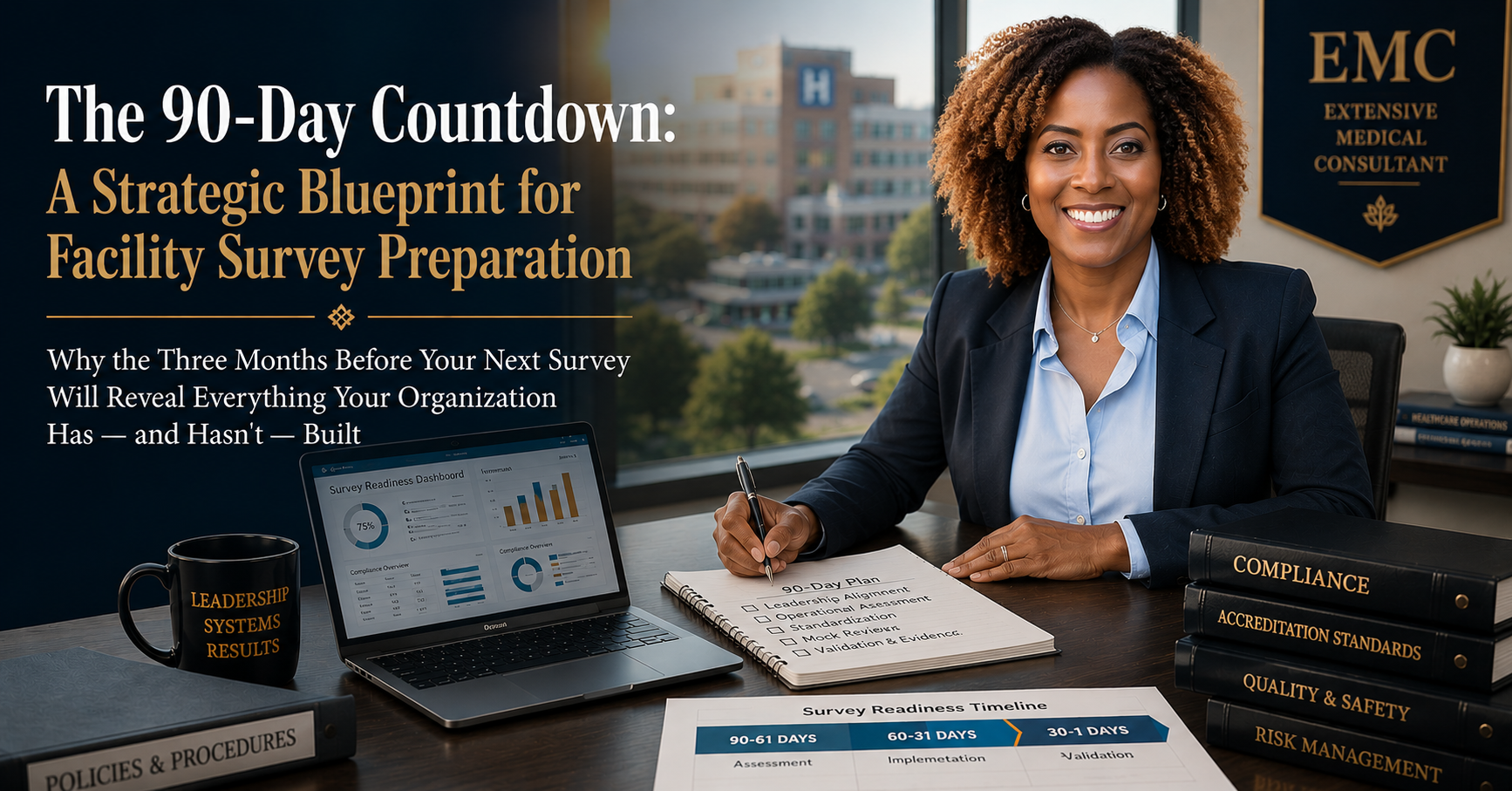
Healthcare accreditation is often treated as a finish line. It is seen as a milestone to cross, celebrate, and then move on from until the next survey cycle appears. For healthcare leaders, administrators, and compliance professionals operating under standards set by the Joint Commission, NCCHC, ACA, ODO, and AAAHC, this mindset is not only outdated but also risky. Accreditation was never intended to function as a periodic checklist. It reflects how an organization operates every single day. In today’s regulatory environment, where expectations are higher and scrutiny is constant, continuous readiness is no longer optional. It is the foundation of sustainable, high-quality healthcare delivery. At Extensive Medical Consultant (EMC), led by Dr. Scarlett Lusk, PhD, MPH, RHIA, CCHP, accreditation is treated as an operational discipline. This approach strengthens governance, protects patients, and supports long-term organizational resilience. Accreditation Is More Than a Milestone Accreditation bodies do not exist to pass or fail organizations. Their role is to ensure that healthcare systems consistently meet standards that protect patient safety, ethical practice, and quality outcomes. When accreditation is treated as a once-every-few-years hurdle, organizations unintentionally weaken its true purpose. The reality is straightforward. When systems function effectively every day, accreditation becomes confirmation rather than a crisis. Section 1: Common Accreditation Misconceptions and Their Risks Despite years of regulatory advancement, several misconceptions continue to undermine healthcare organizations. Misconception 1: Accreditation Is a One-Time Checklist Many organizations rush to update policies, conduct last-minute training, and organize documentation just weeks before a survey. While this may create the appearance of readiness, it rarely reflects real practice. The risk includes: Inconsistent staff behavior Policies that exist on paper but are not followed Higher likelihood of findings during unannounced surveys Misconception 2: Passing the Last Survey Means You Are Compliant Accreditation standards evolve continuously. Regulatory interpretations change. What passed during the previous survey may no longer meet current expectations. The risk includes: Continued use of outdated policies Failure to address regulatory updates Exposure to citations, corrective action plans, or loss of accreditation Misconception 3: Accreditation Is the Compliance Department’s Responsibility Accreditation is often isolated within compliance teams while leadership and frontline staff remain disengaged. The risk includes: Staff confusion during surveys Leadership is unable to clearly explain compliance strategies A culture driven by reaction instead of accountability Misconception 4: Surveyors Only Review Documents Documentation is important, but it is not the primary focus of surveys. The risk includes: Excessive focus on paperwork Insufficient investment in operational systems and staff competency Section 2: What Surveyors Actually Look For Understanding surveyor expectations is essential for continuous readiness. Across accrediting bodies, surveyors assess whether policy, practice, and outcomes are aligned. 1. Consistency Between Policy and Practice Surveyors observe operations, interview staff, and review documentation to confirm that policies are actively followed. They evaluate whether: Staff understand policies related to their roles Procedures are applied consistently across shifts and departments Leadership can explain how compliance is monitored 2. Leadership Engagement Surveyors expect leadership to be informed, visible, and accountable. They assess: How leaders oversee compliance Whether governance structures support quality and safety If leadership addresses risk proactively 3. Staff Competency and Training Training records alone are insufficient. Surveyors validate training through staff interaction. They look for: Staff confidence in explaining procedures Evidence of ongoing education Clear understanding of emergency, safety, and ethical protocols 4. Continuous Monitoring and Improvement Accreditation bodies emphasize improvement rather than perfection. Surveyors expect to see: Internal audits and self-assessments Corrective actions driven by data Proof that issues are identified internally before external review Section 3: Year-Round Continuous Readiness Strategies Organizations that maintain readiness do not scramble before surveys. Accreditation is embedded in daily operations. 1. Living Policies Instead of Static Manuals Effective policies are: Reviewed on a scheduled basis Updated when regulations change Integrated into daily workflows Best practice: Assign ownership for each policy area and systematically track revisions. 2. Ongoing Staff Education Training should be continuous, role-specific, and practical. Effective methods include: Short, recurring competency refreshers Scenario-based learning Leadership-led discussions that reinforce expectations 3. Internal Audits and Mock Surveys Routine self-assessments reveal gaps early. Key components include: Internal audits aligned with accreditation standards Leadership participation in mock surveys Clear tracking of corrective actions 4. Data-Driven Monitoring Continuous readiness relies on measurable insight. Organizations should monitor: Incident trends Compliance metrics Quality indicators linked to accreditation standards Data transforms compliance from a reactive task into a strategic advantage. 5. Leadership Accountability When leadership owns accreditation, readiness becomes part of organizational culture. This includes: Regular compliance briefings Clear reporting structures Visible leadership involvement in preparedness efforts Section 4: EMC’s Proactive Accreditation Model At Extensive Medical Consultant, accreditation is treated as an integrated operational system rather than a seasonal project. Under the leadership of Dr. Scarlett Lusk, EMC has developed a proactive model that supports continuous readiness across correctional healthcare, public health systems, ambulatory care, and private clinics. Key Elements of EMC’s Model 1. Systems-Based Assessment EMC evaluates how governance, operations, staffing, and policies function together. 2. Regulatory Alignment Across Standards EMC helps organizations meet overlapping requirements from multiple accrediting bodies through unified systems. 3. Leadership-Centered Readiness Executive teams are equipped to engage confidently with surveyors and sustain compliance. 4. Continuous Support EMC partners with organizations year-round instead of appearing only before surveys. 5. Education and Empowerment Staff and leadership learn not only how to meet standards, but why those standards exist and how they improve care. This approach transforms accreditation from a source of stress into a strategic asset. Conclusion: Readiness Is a Leadership Decision Accreditation is not a single moment in time. It reflects leadership commitment, organizational discipline, and system integrity. Healthcare organizations that embrace continuous readiness: Reduce regulatory risk Improve patient outcomes Strengthen staff confidence Build sustainable operational excellence Organizations that rely on last-minute preparation expose themselves to disruption and reputational harm. The question is no longer when your next survey will occur. The question is whether your systems are ready today . At Extensive Medical Consultant, Dr. Scarlett Lusk and her team help organizations move beyond checklist compliance toward lasting readiness and resilience. If your organization is ready to transition from reactive accreditation to continuous confidence, now is the time to act.
By Scarlett Lusk January 10, 2026
Non-compliance costs clinics far more than fines lost revenue, staff burnout, and reputational damage. Discover the hidden risks and how EMC helps clinics stay protected, efficient, and future-ready.
By Scarlett Lusk January 2, 2026
Prepare your clinic or hospital for 2026 with proactive compliance, stronger systems, and expert leadership guidance from Dr. Scarlett Lusk at Extensive Medical Consultant.
By Scarlett Lusk December 21, 2025
From bedside care to boardroom strategy, learn how clinical experience becomes an executive advantage. Dr. Scarlett Lusk and Extensive Medical Consultant reveal practical steps for clinicians ready to lead healthcare organizations.
Four people at a table, looking at data charts on tablets and laptop in a meeting.
By Scarlett Lusk November 19, 2025
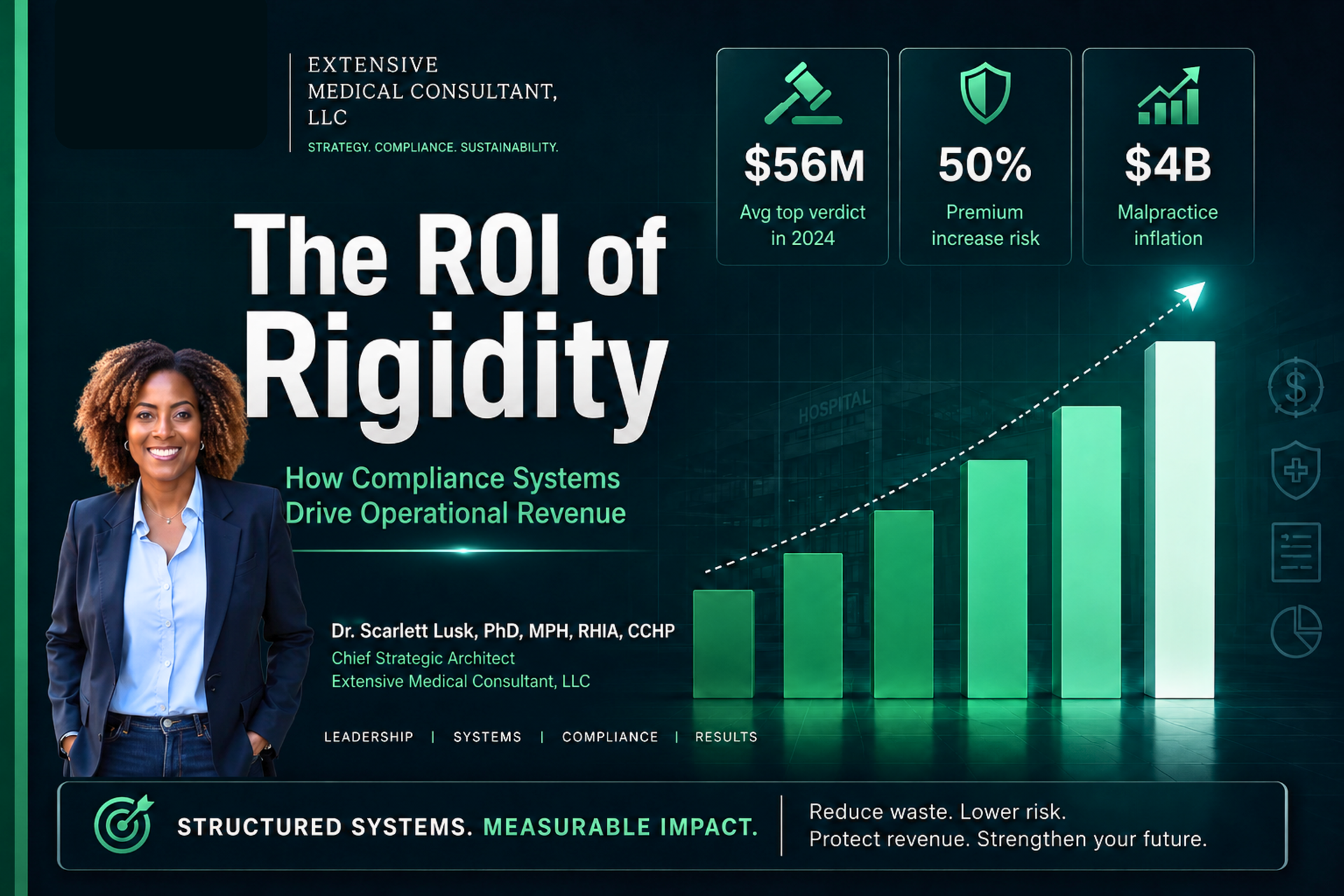
Introduction: Why Healthcare Must Evolve Beyond Patient Satisfaction For decades, healthcare organizations relied heavily on patient satisfaction surveys as the gold standard for evaluating performance. While valuable, satisfaction scores alone fail to capture the systemic drivers of quality, safety, and clinical outcomes. In today’s environment, shaped by value-based care models, accreditation pressures, data transparency, and regulatory expectations, healthcare leaders must adopt public health metrics that reveal deeper truths: What is actually driving poor outcomes? Where are the operational risks? Which processes consistently fail? How does population behavior shape clinical performance? At Extensive Medical Consultant, LLC, Dr. Scarlett Lusk, PhD, MPH, CCHP brings her specialized expertise in epidemiology, health systems evaluation, risk mitigation, and correctional healthcare compliance to help clinics move from reactive problem-solving to scientific, measurable performance improvement. Why Public Health Metrics Are Essential in Modern Healthcare Public health metrics evaluate patterns, trends, and system behavior—not just opinions or isolated incidents. When applied inside clinics, these metrics provide actionable insights for improving care, workflow efficiency, and compliance. Key Advantages of Public Health Metrics: Reveal root causes of operational failures Improve clinical decision-making through data Reduce preventable complications Strengthen accreditation readiness Enhance system-level accountability Support long-term organizational sustainability Unlike satisfaction surveys, public health tools expose the real factors affecting outcomes, giving leaders what they need most: truth, clarity, and direction. How Public Health Principles Improve Clinical Operations 1. Epidemiological Tracking: The Clinic’s “Internal Surveillance System” Epidemiology is not limited to infectious diseases. Inside a clinic, epidemiological tracking identifies: Recurring workflow bottlenecks Trends in medication errors or documentation gaps Delays in follow-up or referral patterns High-risk populations needing targeted interventions Patterns in cancellations, no-shows, or adverse events Systemic inequities affecting access or outcomes This method aligns with the expectations of the Joint Commission, AAAHC, NCCHC, ODO, and ACA, who increasingly demand data-supported performance monitoring. Clinics using epidemiological tracking benefit from: ✔ Faster identification of systemic problems ✔ Evidence-driven resource allocation ✔ Stronger quality and safety scores ✔ Improved operational efficiency 2. Quality Improvement (QI) Loops That Produce Measurable Change Public health relies on structured improvement frameworks like: PDSA (Plan-Do-Study-Act) LEAN methodology Root Cause Analysis (RCA) Failure Mode and Effects Analysis (FMEA) Under Dr. Lusk’s guidance, these tools become highly effective inside clinics. Examples of measurable improvements: Reduced patient wait time Increased documentation accuracy Streamlined triage and intake flow Improved care coordination across teams Enhanced performance with accreditation audits Stronger compliance with Joint Commission and AAAHC CQI standards Quality improvement loops transform reactive clinics into proactive, well-governed systems. 3. Population Health Analytics for Micro-Level Efficiency Public health frameworks reveal insights often missed in individual patient encounters. Population Health Applied to Clinics Enables: Early detection of chronic disease patterns Reduced rehospitalization and complication rates Targeted screening programs Social determinant insights influencing compliance Data-driven community outreach Stronger continuity of care Organizations regulated by NCCHC, ACA, and ODO benefit especially from the population health approach, as these groups serve vulnerable populations requiring measurable, transparent performance standards. Accreditation Bodies Now Expect Public Health Metrics Modern accreditation is shifting from static compliance to continuous performance improvement. ➤ Joint Commission Expects robust data systems, outcome measures, and PDSA implementation. ➤ AAAHC Requires ongoing quality monitoring, evidence-based improvement, and measurable results. ➤ NCCHC & ACA Demand public health frameworks in correctional or specialty environments due to the high-risk patient population. ➤ ODO (Office of Detention Oversight) Relies on structured epidemiological and quality audits to ensure safe care delivery. When clinics adopt public health metrics, they naturally become compliant, efficient, safer, and audit-ready. Why Dr. Scarlett Lusk’s MPH Expertise Makes the Difference Dr. Lusk’s background uniquely positions her to transform healthcare organizations through: ✔ Epidemiology & Surveillance System Design Implementing structured tracking systems that reveal hidden operational risks. ✔ Public Health Quality Improvement (PH-QI) Building QI programs that satisfy every major accrediting body. ✔ Population Health Strategy Integrating social determinants, health equity, and preventive strategies into clinic operations. ✔ ACA / NCCHC / ODO / Joint Commission Regulatory Alignment Ensuring clinics meet the highest standards with transparent, data-driven documentation. ✔ Leadership Development for Clinic Executives Empowering managers and administrators to make informed, evidence-based decisions. Her approach blends MPH science with operational strategy, turning data into sustainable solutions. Conclusion: The Future of Healthcare Depends on Public Health Metrics Patient satisfaction alone cannot guide quality improvement. Clinics that embrace public health metrics gain: Better outcomes More efficient operations Stronger accreditation performance Improved staff morale Safer, more standardized workflows Higher trust from patients and regulatory bodies Public health provides the tools, science, and structure needed to elevate clinical care one measurable step at a time. Ready to Transform Your Clinic? If your organization is ready to replace guesswork with evidence-based improvement, we can help. Book a Clinic Performance Improvement Audit with Dr. Scarlett Lusk. Empower your clinic with data. Improve outcomes with science. Lead with excellence.
Woman with eyes closed, hands on chest, appears calm indoors.
By Nayan F November 11, 2025
For individuals navigating life after trauma, reconstructive surgery, or long-term medical procedures, the physical battle often ends long before the emotional one. Scars, depigmentation, or the loss of natural anatomical definition can become daily, visible reminders of the past, profoundly disrupting self-perception and confidence. This is where advanced paramedical tattooing steps in, acting as the crucial, final chapter in the healing journey. It is more than just aesthetic work; it is a blend of medical precision, specialized micro-pigmentation, and meticulous artistic technique dedicated to achieving profound, measurable emotional recovery. The Scars We Carry: Understanding the Psychological Weight A visible mark, whether from mastectomy, surgical revision, or burn injury, is rarely just a patch of skin. For many, it carries heavy psychological baggage that interferes with moving forward: Reliving Trauma: Every glance in the mirror can instantly pull a survivor back to the moment of trauma or surgery, inhibiting post-traumatic growth. Loss of Identity: Procedures like mastectomy often fundamentally alter body image, requiring a visual restoration to reconnect a person with their sense of self and wholeness. Social Isolation: The constant stress of concealment, avoiding certain attire, or fielding intrusive questions can lead to severe social anxiety and isolation. We understand that true recovery is a holistic process. While traditional treatments address the internal and physical aspects, paramedical tattooing provides the essential visual and external closure, giving the patient control over their physical narrative. This act of regaining control is the core of the emotional science behind our work. What is Paramedical Tattooing? The Informed Science Paramedical tattooing is a highly specialized form of advanced micro-pigmentation performed in a sterile, clinical environment. Our goal, as medical tattoo Houston specialists, is not merely artistic design, but functional camouflage, hyper-realistic restoration, and precise pigment neutralization. This requires a deep understanding of dermal layers and pigment retention. The process involves implanting specialized, medical-grade pigments into the upper layers of the dermis to mimic natural skin tones, hair follicles (for SMP), or 3D areolar structure. Key applications where this clinical approach is paramount: 3D Areola Restoration: Utilizing advanced techniques of shadow, highlight, and color saturation to create the hyper-realistic, three-dimensional illusion of the nipple and areola, completing the reconstruction journey for breast cancer survivors. Scar Camouflage: Meticulously matching and neutralizing challenging scars (from trauma, surgery, tummy tucks, or self-harm) to seamlessly blend into the surrounding healthy skin. Scalp Micropigmentation (SMP): Creating the look of natural hair density or a closely shaved head, focusing on follicular realism. The Extensive Medical Consultant Difference: Authority and Empathy In the field of medical aesthetics, expertise backed by public health standards is non-negotiable. At Extensive Medical Consultant, LLC, our commitment to unparalleled patient well-being is led by Dr. Scarlett Lusk. Her extensive background in epidemiology and administration ensures that every procedure is rooted not just in artistry, but in scientific rigor and regulatory compliance. Dr. Lusk’s unique oversight elevates our scar camouflage and 3D Areola work far above standard cosmetic services: Epidemiology-Driven Safety: Drawing upon her public health expertise, Dr. Lusk enforces stringent infection prevention and cross-contamination protocols, guaranteeing the safest, most sterile clinical environment possible a critical distinction in medical tattooing. Advanced Color Science and Longevity: Scar tissue and reconstructed skin have unique vascular and cellular structures that affect pigment retention. Dr. Lusk’s team masterfully custom-formulates pigments, analyzing factors like UV exposure and skin tone history to ensure superior, long-term color stability and natural, undetectable blending. Precision Artistry for Realism: We employ advanced shading and textural techniques to create true illusions of depth and dimension. This precision is the key to a result that is not only covered but genuinely restored. When you choose Extensive Medical Consultant, you are choosing a partner who views your transformation through both a compassionate and a clinical lens, ensuring the most realistic, enduring, and psychologically powerful results available in Houston. Reclaiming the Narrative: Agency and Confidence The most profound outcome of paramedical tattooing is the fundamental shift in perspective. Clients report feeling a heavy psychological weight lifted no longer seeing a constant, stark reminder of a painful past, but instead seeing skin that blends, that heals, and that is whole. This restored sense of physical normalcy facilitates deep emotional healing, boosts self-acceptance, and empowers survivors to re-engage socially and conclude their personal recovery story with confidence. This is the emotional science in action: the aesthetic change that ignites the psychological breakthrough. Ready for Emotional Closure? Your Next Chapter Starts Here. You have completed the difficult work of surviving; now, let us help you complete the visual journey of thriving. If you are ready to take the final, powerful step toward emotional recovery and visual completion, trust the unwavering medical expertise of Dr. Scarlett Lusk and the precision artistry at Extensive Medical Consultant. Do not wait to reclaim your story. We offer confidential, specialized consultations to discuss your unique needs for expert scar camouflage or hyper-realistic 3D Areola restoration in Houston. Take agency over your physical narrative. Book Your Consultation Today.
Scalp micropigmentation procedure, gloved hands applying ink to a shaved head.
By Scarlett Lusk November 7, 2025
In the ever-evolving world of hair restoration, Scalp Micropigmentation (SMP) has gained global attention as a life-changing solution for men and women facing hair loss. Yet, while social media is flooded with “SMP transformations,” few understand the clinical science and precision that separate a medically guided SMP procedure from a cosmetic tattoo. At Extensive Medical Consultant, LLC , led by Dr. Scarlett Lusk, PhD, MPH, CCHP , we believe SMP is far more than a cosmetic fix; it’s a clinical art form . Every microdot, pigment, and pressure point is guided by anatomy, sterilization standards, and a deep understanding of skin physiology.  SMP Is Not a Tattoo; It’s a Medical Procedure Traditional tattoos deposit ink into the dermis for artistic expression. SMP, however, requires a microscopic precision layer of pigment placement that mimics the natural appearance of hair follicles. When performed by a medical scalp micropigmentation expert , each pigment dot is measured for depth, tone, and density to create a realistic illusion of natural hair growth. At our Houston-based clinical practice, we use medical-grade pigments , sterile single-use equipment, and advanced technique calibration to ensure long-term color stability and safety . This is where clinical SMP diverges from cosmetic tattooing; it’s grounded in science, not aesthetics alone. The Science Behind Natural Density & Hairline Design Every scalp tells a story, and every hairline must be designed to match it. Our team uses trichological mapping and individualized scalp assessments to craft designs that reflect natural direction, density, and gradient. Dr. Lusk’s team ensures each SMP session follows medical best practices: Depth control: Pigment placement is carefully controlled to avoid blowouts or discoloration. Density calibration: Dot patterns are distributed according to natural follicular groupings. Pigment analysis: Custom pigment formulas are created based on your skin tone and undertone. This blend of medical precision and artistic mastery produces SMP results that are indistinguishable from real hair, even up close. Safety, Sterility, and Skin Health: Our Non-Negotiables Many SMP providers overlook what truly matters: infection control, pigment biocompatibility, and client safety . At Extensive Medical Consultant , every procedure is conducted under strict clinical supervision, with sterilized environments that exceed standard tattoo regulations. This commitment to sterility, safety, and ethics ensures that our clients don’t just regain confidence; they do so in a medically safe and trusted environment. SMP as a Confidence-Driven Medical Art For our patients, SMP is often the final step in emotional and physical restoration. Whether you’re recovering from alopecia, surgical hair loss, or simply seeking fuller density, the impact goes beyond appearance; it’s about reclaiming control. Dr. Lusk often reminds clients: “Restoring confidence begins when science meets compassion.” That is the foundation of our SMP philosophy, art guided by medical integrity . The Clinical Advantage with Extensive Medical Consultant When you choose our team, you’re not booking a tattoo appointment — you’re investing in a clinical transformation backed by medical expertise, sterile technique, and aesthetic precision. We bridge the gap between medicine and artistry , ensuring every treatment is safe, natural, and long-lasting. Ready to Redefine What Confidence Looks Like? Step beyond cosmetic quick fixes and experience the precision of medical-grade SMP artistry . At Extensive Medical Consultant , every treatment is guided by science, ethics, and aesthetic mastery, ensuring results that feel authentic, empowering, and enduring. Because true restoration isn’t just about hair, it’s about confidence reborn through clinical excellence . Begin your SMP journey with experts who merge medicine, artistry, and trust . Contact us today for your personal consultation!
Medical team in white coats and suits, meeting at a large table with data and a laptop in a bright office with city views.
By Scarlett Lusk November 1, 2025
Discover how proper provider credentialing drives compliance success and boosts your regulatory audit score—expert insights from Dr. Scarlett Lusk, EMC.
Woman receiving facial treatment, therapist holding tools, eyes closed, white table setting.
By Scarlett Lusk October 27, 2025
Beyond the Needles: Why the Science of Growth Factors is Transforming Skin Renewal
Medical professionals in a meeting; doctor with stethoscope, businesswoman gesturing, laptop on table.
By Scarlett Lusk October 22, 2025
Discover how Dr. Scarlett Lusk, PhD, MPH, RHIA, CCHP, and her team at Extensive Medical Consultant (EMC) transform healthcare compliance into lasting success. Learn what makes EMC a trusted leader in healthcare consulting, accreditation, and operational excellence.
More Posts
By Scarlett Lusk January 17, 2026
Healthcare accreditation is often treated as a finish line. It is seen as a milestone to cross, celebrate, and then move on from until the next survey cycle appears. For healthcare leaders, administrators, and compliance professionals operating under standards set by the Joint Commission, NCCHC, ACA, ODO, and AAAHC, this mindset is not only outdated but also risky. Accreditation was never intended to function as a periodic checklist. It reflects how an organization operates every single day. In today’s regulatory environment, where expectations are higher and scrutiny is constant, continuous readiness is no longer optional. It is the foundation of sustainable, high-quality healthcare delivery. At Extensive Medical Consultant (EMC), led by Dr. Scarlett Lusk, PhD, MPH, RHIA, CCHP, accreditation is treated as an operational discipline. This approach strengthens governance, protects patients, and supports long-term organizational resilience. Accreditation Is More Than a Milestone Accreditation bodies do not exist to pass or fail organizations. Their role is to ensure that healthcare systems consistently meet standards that protect patient safety, ethical practice, and quality outcomes. When accreditation is treated as a once-every-few-years hurdle, organizations unintentionally weaken its true purpose. The reality is straightforward. When systems function effectively every day, accreditation becomes confirmation rather than a crisis. Section 1: Common Accreditation Misconceptions and Their Risks Despite years of regulatory advancement, several misconceptions continue to undermine healthcare organizations. Misconception 1: Accreditation Is a One-Time Checklist Many organizations rush to update policies, conduct last-minute training, and organize documentation just weeks before a survey. While this may create the appearance of readiness, it rarely reflects real practice. The risk includes: Inconsistent staff behavior Policies that exist on paper but are not followed Higher likelihood of findings during unannounced surveys Misconception 2: Passing the Last Survey Means You Are Compliant Accreditation standards evolve continuously. Regulatory interpretations change. What passed during the previous survey may no longer meet current expectations. The risk includes: Continued use of outdated policies Failure to address regulatory updates Exposure to citations, corrective action plans, or loss of accreditation Misconception 3: Accreditation Is the Compliance Department’s Responsibility Accreditation is often isolated within compliance teams while leadership and frontline staff remain disengaged. The risk includes: Staff confusion during surveys Leadership is unable to clearly explain compliance strategies A culture driven by reaction instead of accountability Misconception 4: Surveyors Only Review Documents Documentation is important, but it is not the primary focus of surveys. The risk includes: Excessive focus on paperwork Insufficient investment in operational systems and staff competency Section 2: What Surveyors Actually Look For Understanding surveyor expectations is essential for continuous readiness. Across accrediting bodies, surveyors assess whether policy, practice, and outcomes are aligned. 1. Consistency Between Policy and Practice Surveyors observe operations, interview staff, and review documentation to confirm that policies are actively followed. They evaluate whether: Staff understand policies related to their roles Procedures are applied consistently across shifts and departments Leadership can explain how compliance is monitored 2. Leadership Engagement Surveyors expect leadership to be informed, visible, and accountable. They assess: How leaders oversee compliance Whether governance structures support quality and safety If leadership addresses risk proactively 3. Staff Competency and Training Training records alone are insufficient. Surveyors validate training through staff interaction. They look for: Staff confidence in explaining procedures Evidence of ongoing education Clear understanding of emergency, safety, and ethical protocols 4. Continuous Monitoring and Improvement Accreditation bodies emphasize improvement rather than perfection. Surveyors expect to see: Internal audits and self-assessments Corrective actions driven by data Proof that issues are identified internally before external review Section 3: Year-Round Continuous Readiness Strategies Organizations that maintain readiness do not scramble before surveys. Accreditation is embedded in daily operations. 1. Living Policies Instead of Static Manuals Effective policies are: Reviewed on a scheduled basis Updated when regulations change Integrated into daily workflows Best practice: Assign ownership for each policy area and systematically track revisions. 2. Ongoing Staff Education Training should be continuous, role-specific, and practical. Effective methods include: Short, recurring competency refreshers Scenario-based learning Leadership-led discussions that reinforce expectations 3. Internal Audits and Mock Surveys Routine self-assessments reveal gaps early. Key components include: Internal audits aligned with accreditation standards Leadership participation in mock surveys Clear tracking of corrective actions 4. Data-Driven Monitoring Continuous readiness relies on measurable insight. Organizations should monitor: Incident trends Compliance metrics Quality indicators linked to accreditation standards Data transforms compliance from a reactive task into a strategic advantage. 5. Leadership Accountability When leadership owns accreditation, readiness becomes part of organizational culture. This includes: Regular compliance briefings Clear reporting structures Visible leadership involvement in preparedness efforts Section 4: EMC’s Proactive Accreditation Model At Extensive Medical Consultant, accreditation is treated as an integrated operational system rather than a seasonal project. Under the leadership of Dr. Scarlett Lusk, EMC has developed a proactive model that supports continuous readiness across correctional healthcare, public health systems, ambulatory care, and private clinics. Key Elements of EMC’s Model 1. Systems-Based Assessment EMC evaluates how governance, operations, staffing, and policies function together. 2. Regulatory Alignment Across Standards EMC helps organizations meet overlapping requirements from multiple accrediting bodies through unified systems. 3. Leadership-Centered Readiness Executive teams are equipped to engage confidently with surveyors and sustain compliance. 4. Continuous Support EMC partners with organizations year-round instead of appearing only before surveys. 5. Education and Empowerment Staff and leadership learn not only how to meet standards, but why those standards exist and how they improve care. This approach transforms accreditation from a source of stress into a strategic asset. Conclusion: Readiness Is a Leadership Decision Accreditation is not a single moment in time. It reflects leadership commitment, organizational discipline, and system integrity. Healthcare organizations that embrace continuous readiness: Reduce regulatory risk Improve patient outcomes Strengthen staff confidence Build sustainable operational excellence Organizations that rely on last-minute preparation expose themselves to disruption and reputational harm. The question is no longer when your next survey will occur. The question is whether your systems are ready today . At Extensive Medical Consultant, Dr. Scarlett Lusk and her team help organizations move beyond checklist compliance toward lasting readiness and resilience. If your organization is ready to transition from reactive accreditation to continuous confidence, now is the time to act.
By Scarlett Lusk January 10, 2026
Non-compliance costs clinics far more than fines lost revenue, staff burnout, and reputational damage. Discover the hidden risks and how EMC helps clinics stay protected, efficient, and future-ready.
By Scarlett Lusk January 2, 2026
Prepare your clinic or hospital for 2026 with proactive compliance, stronger systems, and expert leadership guidance from Dr. Scarlett Lusk at Extensive Medical Consultant.
By Scarlett Lusk December 21, 2025
From bedside care to boardroom strategy, learn how clinical experience becomes an executive advantage. Dr. Scarlett Lusk and Extensive Medical Consultant reveal practical steps for clinicians ready to lead healthcare organizations.
Four people at a table, looking at data charts on tablets and laptop in a meeting.
By Scarlett Lusk November 19, 2025
Introduction: Why Healthcare Must Evolve Beyond Patient Satisfaction For decades, healthcare organizations relied heavily on patient satisfaction surveys as the gold standard for evaluating performance. While valuable, satisfaction scores alone fail to capture the systemic drivers of quality, safety, and clinical outcomes. In today’s environment, shaped by value-based care models, accreditation pressures, data transparency, and regulatory expectations, healthcare leaders must adopt public health metrics that reveal deeper truths: What is actually driving poor outcomes? Where are the operational risks? Which processes consistently fail? How does population behavior shape clinical performance? At Extensive Medical Consultant, LLC, Dr. Scarlett Lusk, PhD, MPH, CCHP brings her specialized expertise in epidemiology, health systems evaluation, risk mitigation, and correctional healthcare compliance to help clinics move from reactive problem-solving to scientific, measurable performance improvement. Why Public Health Metrics Are Essential in Modern Healthcare Public health metrics evaluate patterns, trends, and system behavior—not just opinions or isolated incidents. When applied inside clinics, these metrics provide actionable insights for improving care, workflow efficiency, and compliance. Key Advantages of Public Health Metrics: Reveal root causes of operational failures Improve clinical decision-making through data Reduce preventable complications Strengthen accreditation readiness Enhance system-level accountability Support long-term organizational sustainability Unlike satisfaction surveys, public health tools expose the real factors affecting outcomes, giving leaders what they need most: truth, clarity, and direction. How Public Health Principles Improve Clinical Operations 1. Epidemiological Tracking: The Clinic’s “Internal Surveillance System” Epidemiology is not limited to infectious diseases. Inside a clinic, epidemiological tracking identifies: Recurring workflow bottlenecks Trends in medication errors or documentation gaps Delays in follow-up or referral patterns High-risk populations needing targeted interventions Patterns in cancellations, no-shows, or adverse events Systemic inequities affecting access or outcomes This method aligns with the expectations of the Joint Commission, AAAHC, NCCHC, ODO, and ACA, who increasingly demand data-supported performance monitoring. Clinics using epidemiological tracking benefit from: ✔ Faster identification of systemic problems ✔ Evidence-driven resource allocation ✔ Stronger quality and safety scores ✔ Improved operational efficiency 2. Quality Improvement (QI) Loops That Produce Measurable Change Public health relies on structured improvement frameworks like: PDSA (Plan-Do-Study-Act) LEAN methodology Root Cause Analysis (RCA) Failure Mode and Effects Analysis (FMEA) Under Dr. Lusk’s guidance, these tools become highly effective inside clinics. Examples of measurable improvements: Reduced patient wait time Increased documentation accuracy Streamlined triage and intake flow Improved care coordination across teams Enhanced performance with accreditation audits Stronger compliance with Joint Commission and AAAHC CQI standards Quality improvement loops transform reactive clinics into proactive, well-governed systems. 3. Population Health Analytics for Micro-Level Efficiency Public health frameworks reveal insights often missed in individual patient encounters. Population Health Applied to Clinics Enables: Early detection of chronic disease patterns Reduced rehospitalization and complication rates Targeted screening programs Social determinant insights influencing compliance Data-driven community outreach Stronger continuity of care Organizations regulated by NCCHC, ACA, and ODO benefit especially from the population health approach, as these groups serve vulnerable populations requiring measurable, transparent performance standards. Accreditation Bodies Now Expect Public Health Metrics Modern accreditation is shifting from static compliance to continuous performance improvement. ➤ Joint Commission Expects robust data systems, outcome measures, and PDSA implementation. ➤ AAAHC Requires ongoing quality monitoring, evidence-based improvement, and measurable results. ➤ NCCHC & ACA Demand public health frameworks in correctional or specialty environments due to the high-risk patient population. ➤ ODO (Office of Detention Oversight) Relies on structured epidemiological and quality audits to ensure safe care delivery. When clinics adopt public health metrics, they naturally become compliant, efficient, safer, and audit-ready. Why Dr. Scarlett Lusk’s MPH Expertise Makes the Difference Dr. Lusk’s background uniquely positions her to transform healthcare organizations through: ✔ Epidemiology & Surveillance System Design Implementing structured tracking systems that reveal hidden operational risks. ✔ Public Health Quality Improvement (PH-QI) Building QI programs that satisfy every major accrediting body. ✔ Population Health Strategy Integrating social determinants, health equity, and preventive strategies into clinic operations. ✔ ACA / NCCHC / ODO / Joint Commission Regulatory Alignment Ensuring clinics meet the highest standards with transparent, data-driven documentation. ✔ Leadership Development for Clinic Executives Empowering managers and administrators to make informed, evidence-based decisions. Her approach blends MPH science with operational strategy, turning data into sustainable solutions. Conclusion: The Future of Healthcare Depends on Public Health Metrics Patient satisfaction alone cannot guide quality improvement. Clinics that embrace public health metrics gain: Better outcomes More efficient operations Stronger accreditation performance Improved staff morale Safer, more standardized workflows Higher trust from patients and regulatory bodies Public health provides the tools, science, and structure needed to elevate clinical care one measurable step at a time. Ready to Transform Your Clinic? If your organization is ready to replace guesswork with evidence-based improvement, we can help. Book a Clinic Performance Improvement Audit with Dr. Scarlett Lusk. Empower your clinic with data. Improve outcomes with science. Lead with excellence.
Woman with eyes closed, hands on chest, appears calm indoors.
By Nayan F November 11, 2025
For individuals navigating life after trauma, reconstructive surgery, or long-term medical procedures, the physical battle often ends long before the emotional one. Scars, depigmentation, or the loss of natural anatomical definition can become daily, visible reminders of the past, profoundly disrupting self-perception and confidence. This is where advanced paramedical tattooing steps in, acting as the crucial, final chapter in the healing journey. It is more than just aesthetic work; it is a blend of medical precision, specialized micro-pigmentation, and meticulous artistic technique dedicated to achieving profound, measurable emotional recovery. The Scars We Carry: Understanding the Psychological Weight A visible mark, whether from mastectomy, surgical revision, or burn injury, is rarely just a patch of skin. For many, it carries heavy psychological baggage that interferes with moving forward: Reliving Trauma: Every glance in the mirror can instantly pull a survivor back to the moment of trauma or surgery, inhibiting post-traumatic growth. Loss of Identity: Procedures like mastectomy often fundamentally alter body image, requiring a visual restoration to reconnect a person with their sense of self and wholeness. Social Isolation: The constant stress of concealment, avoiding certain attire, or fielding intrusive questions can lead to severe social anxiety and isolation. We understand that true recovery is a holistic process. While traditional treatments address the internal and physical aspects, paramedical tattooing provides the essential visual and external closure, giving the patient control over their physical narrative. This act of regaining control is the core of the emotional science behind our work. What is Paramedical Tattooing? The Informed Science Paramedical tattooing is a highly specialized form of advanced micro-pigmentation performed in a sterile, clinical environment. Our goal, as medical tattoo Houston specialists, is not merely artistic design, but functional camouflage, hyper-realistic restoration, and precise pigment neutralization. This requires a deep understanding of dermal layers and pigment retention. The process involves implanting specialized, medical-grade pigments into the upper layers of the dermis to mimic natural skin tones, hair follicles (for SMP), or 3D areolar structure. Key applications where this clinical approach is paramount: 3D Areola Restoration: Utilizing advanced techniques of shadow, highlight, and color saturation to create the hyper-realistic, three-dimensional illusion of the nipple and areola, completing the reconstruction journey for breast cancer survivors. Scar Camouflage: Meticulously matching and neutralizing challenging scars (from trauma, surgery, tummy tucks, or self-harm) to seamlessly blend into the surrounding healthy skin. Scalp Micropigmentation (SMP): Creating the look of natural hair density or a closely shaved head, focusing on follicular realism. The Extensive Medical Consultant Difference: Authority and Empathy In the field of medical aesthetics, expertise backed by public health standards is non-negotiable. At Extensive Medical Consultant, LLC, our commitment to unparalleled patient well-being is led by Dr. Scarlett Lusk. Her extensive background in epidemiology and administration ensures that every procedure is rooted not just in artistry, but in scientific rigor and regulatory compliance. Dr. Lusk’s unique oversight elevates our scar camouflage and 3D Areola work far above standard cosmetic services: Epidemiology-Driven Safety: Drawing upon her public health expertise, Dr. Lusk enforces stringent infection prevention and cross-contamination protocols, guaranteeing the safest, most sterile clinical environment possible a critical distinction in medical tattooing. Advanced Color Science and Longevity: Scar tissue and reconstructed skin have unique vascular and cellular structures that affect pigment retention. Dr. Lusk’s team masterfully custom-formulates pigments, analyzing factors like UV exposure and skin tone history to ensure superior, long-term color stability and natural, undetectable blending. Precision Artistry for Realism: We employ advanced shading and textural techniques to create true illusions of depth and dimension. This precision is the key to a result that is not only covered but genuinely restored. When you choose Extensive Medical Consultant, you are choosing a partner who views your transformation through both a compassionate and a clinical lens, ensuring the most realistic, enduring, and psychologically powerful results available in Houston. Reclaiming the Narrative: Agency and Confidence The most profound outcome of paramedical tattooing is the fundamental shift in perspective. Clients report feeling a heavy psychological weight lifted no longer seeing a constant, stark reminder of a painful past, but instead seeing skin that blends, that heals, and that is whole. This restored sense of physical normalcy facilitates deep emotional healing, boosts self-acceptance, and empowers survivors to re-engage socially and conclude their personal recovery story with confidence. This is the emotional science in action: the aesthetic change that ignites the psychological breakthrough. Ready for Emotional Closure? Your Next Chapter Starts Here. You have completed the difficult work of surviving; now, let us help you complete the visual journey of thriving. If you are ready to take the final, powerful step toward emotional recovery and visual completion, trust the unwavering medical expertise of Dr. Scarlett Lusk and the precision artistry at Extensive Medical Consultant. Do not wait to reclaim your story. We offer confidential, specialized consultations to discuss your unique needs for expert scar camouflage or hyper-realistic 3D Areola restoration in Houston. Take agency over your physical narrative. Book Your Consultation Today.
Scalp micropigmentation procedure, gloved hands applying ink to a shaved head.
By Scarlett Lusk November 7, 2025
In the ever-evolving world of hair restoration, Scalp Micropigmentation (SMP) has gained global attention as a life-changing solution for men and women facing hair loss. Yet, while social media is flooded with “SMP transformations,” few understand the clinical science and precision that separate a medically guided SMP procedure from a cosmetic tattoo. At Extensive Medical Consultant, LLC , led by Dr. Scarlett Lusk, PhD, MPH, CCHP , we believe SMP is far more than a cosmetic fix; it’s a clinical art form . Every microdot, pigment, and pressure point is guided by anatomy, sterilization standards, and a deep understanding of skin physiology.  SMP Is Not a Tattoo; It’s a Medical Procedure Traditional tattoos deposit ink into the dermis for artistic expression. SMP, however, requires a microscopic precision layer of pigment placement that mimics the natural appearance of hair follicles. When performed by a medical scalp micropigmentation expert , each pigment dot is measured for depth, tone, and density to create a realistic illusion of natural hair growth. At our Houston-based clinical practice, we use medical-grade pigments , sterile single-use equipment, and advanced technique calibration to ensure long-term color stability and safety . This is where clinical SMP diverges from cosmetic tattooing; it’s grounded in science, not aesthetics alone. The Science Behind Natural Density & Hairline Design Every scalp tells a story, and every hairline must be designed to match it. Our team uses trichological mapping and individualized scalp assessments to craft designs that reflect natural direction, density, and gradient. Dr. Lusk’s team ensures each SMP session follows medical best practices: Depth control: Pigment placement is carefully controlled to avoid blowouts or discoloration. Density calibration: Dot patterns are distributed according to natural follicular groupings. Pigment analysis: Custom pigment formulas are created based on your skin tone and undertone. This blend of medical precision and artistic mastery produces SMP results that are indistinguishable from real hair, even up close. Safety, Sterility, and Skin Health: Our Non-Negotiables Many SMP providers overlook what truly matters: infection control, pigment biocompatibility, and client safety . At Extensive Medical Consultant , every procedure is conducted under strict clinical supervision, with sterilized environments that exceed standard tattoo regulations. This commitment to sterility, safety, and ethics ensures that our clients don’t just regain confidence; they do so in a medically safe and trusted environment. SMP as a Confidence-Driven Medical Art For our patients, SMP is often the final step in emotional and physical restoration. Whether you’re recovering from alopecia, surgical hair loss, or simply seeking fuller density, the impact goes beyond appearance; it’s about reclaiming control. Dr. Lusk often reminds clients: “Restoring confidence begins when science meets compassion.” That is the foundation of our SMP philosophy, art guided by medical integrity . The Clinical Advantage with Extensive Medical Consultant When you choose our team, you’re not booking a tattoo appointment — you’re investing in a clinical transformation backed by medical expertise, sterile technique, and aesthetic precision. We bridge the gap between medicine and artistry , ensuring every treatment is safe, natural, and long-lasting. Ready to Redefine What Confidence Looks Like? Step beyond cosmetic quick fixes and experience the precision of medical-grade SMP artistry . At Extensive Medical Consultant , every treatment is guided by science, ethics, and aesthetic mastery, ensuring results that feel authentic, empowering, and enduring. Because true restoration isn’t just about hair, it’s about confidence reborn through clinical excellence . Begin your SMP journey with experts who merge medicine, artistry, and trust . Contact us today for your personal consultation!
Medical team in white coats and suits, meeting at a large table with data and a laptop in a bright office with city views.
By Scarlett Lusk November 1, 2025
Discover how proper provider credentialing drives compliance success and boosts your regulatory audit score—expert insights from Dr. Scarlett Lusk, EMC.
Woman receiving facial treatment, therapist holding tools, eyes closed, white table setting.
By Scarlett Lusk October 27, 2025
Beyond the Needles: Why the Science of Growth Factors is Transforming Skin Renewal
Medical professionals in a meeting; doctor with stethoscope, businesswoman gesturing, laptop on table.
By Scarlett Lusk October 22, 2025
Discover how Dr. Scarlett Lusk, PhD, MPH, RHIA, CCHP, and her team at Extensive Medical Consultant (EMC) transform healthcare compliance into lasting success. Learn what makes EMC a trusted leader in healthcare consulting, accreditation, and operational excellence.